Important!
- The tape is always applied to the surface with firm and strong thumb or finger pressure. Post-processing is preferably done with a roller or plastic spatula.
- Consider movements in the substrate. These should be minimized for optimal strength and durability.
- Test the adhesion on questionable surfaces beforehand.
- Do not stretch the tape too elastically as it will always try to return to its original shape and width.
- The applicable surfaces should be clean, dry, and free from dirt, grease, and silicone. Consider the adhesion to the substrate as well as any special surface treatments.
- More porous surfaces or surfaces with reduced adhesion should be pre-treated with a substrate-compatible acrylic-based primer.
- Ensure that the current substrate is sufficiently secured according to the material's installation instructions and that the taping is not solely a load-bearing element for the substrate, but primarily a joint seal.
- When taping at lower temperatures: The tape will achieve its final strength at temperatures above +5°C. Always make sure to press firmly on the entire back of the tape during application, and never overstretch the tape at the moment. Preferably store the tape in a warm place, at room temperature, before the installation. Completely avoid taping on icy, frosty, or damp surfaces.
- To ensure aging resistance, the tape should be stored in a dry environment and protected from sunlight (UV radiation). Avoid higher storage temperatures (> +30°C).
- The product should be integrated and protected during use behind the outer facade. Maximum external UV exposure during construction is up to 12 months.
- The top edge of horizontal nail battens against the wind barrier can be taped for optimal weather/rain protection. Half of the tape's width on the batten and half on the wind barrier/wall.
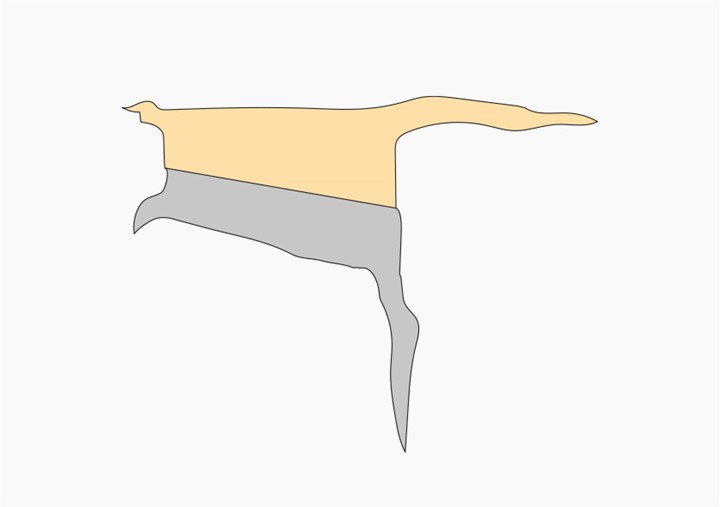
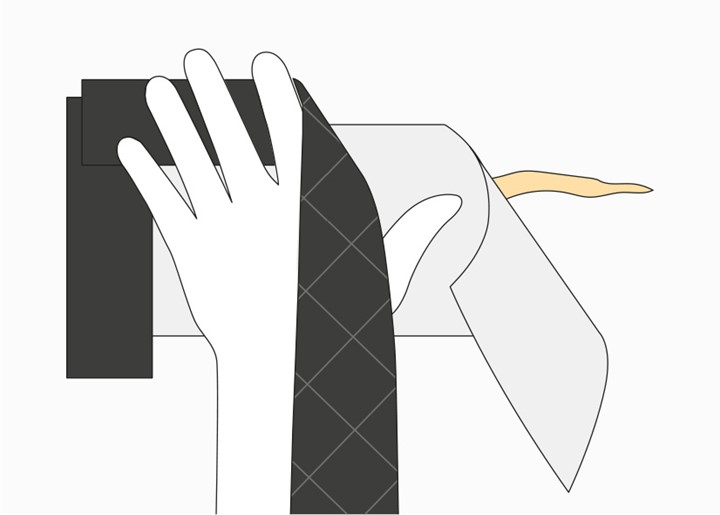
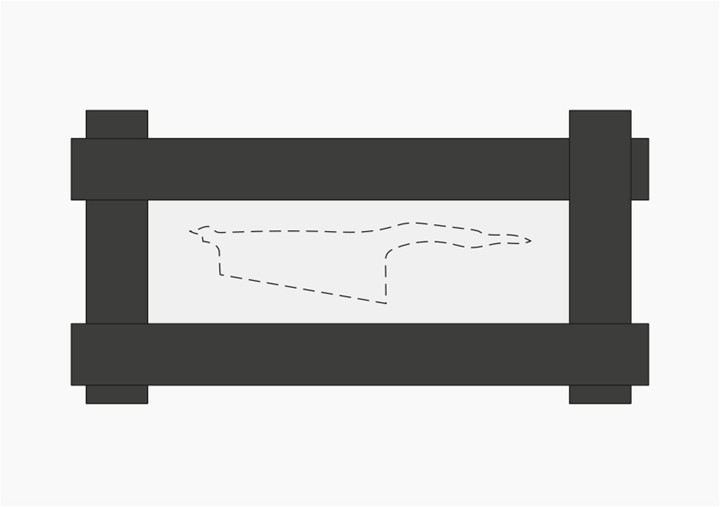
- For identification, always tape up the first piece with the label visible!
1. General assembly
Cut to the appropriate length and remove the protective film. Attach the tape to the surface carefully with pressure from the center of the tape out to both edges. For longer pieces, remove a little of the protective film first, attach and roll out while pulling off the film. Cut to the desired length. With firm pressure over the entire tape back, the best possible adhesion is achieved (preferably use a roller during installation). Always keep the first piece on the roll, including the marking label, clearly visible somewhere on it
taped object. When used on diffusion-open surfaces such as wind barriers, avoid taping wider than the tape's width or up to 75 mm. On smaller restricted areas such as connections/pass-throughs, overlapping taping is allowed up to 1.5 times the tape's width. When taping sealing gaps externally around windows and doors, see separate description (Seal Correctly, Prevent Leakage at Windows and Doors).
2. Overlap seam wind protection fabric
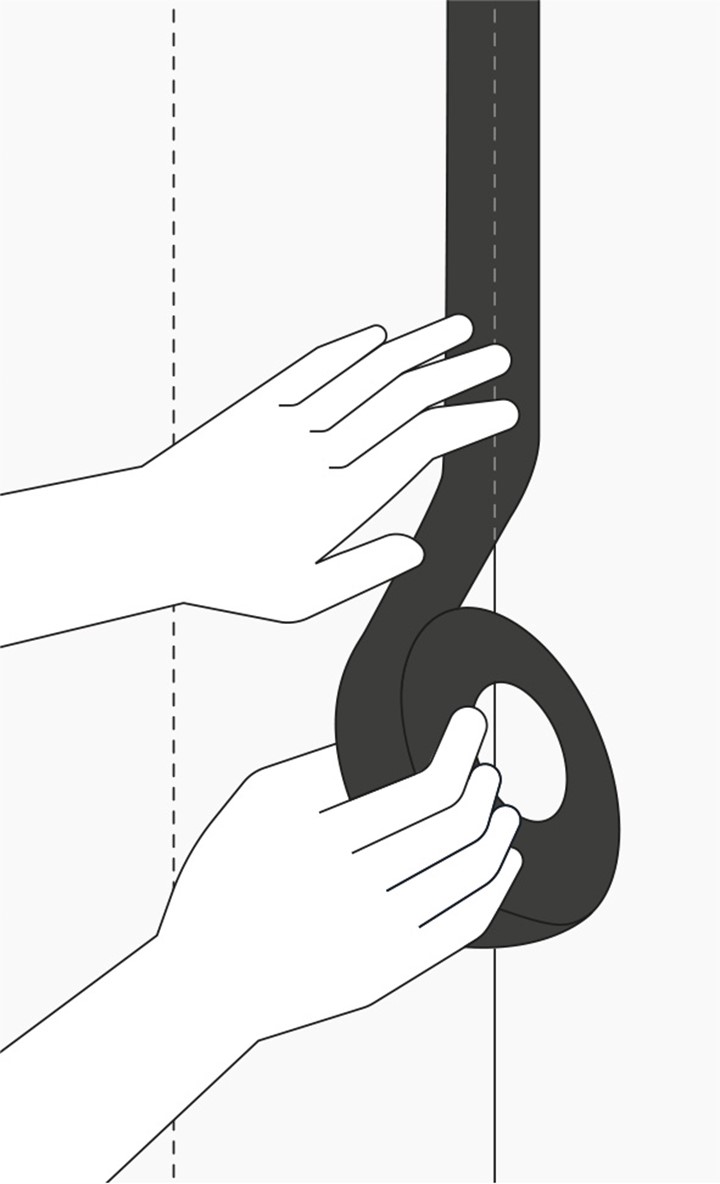
At the joint, the tape should be attached halfway on one surface and halfway on the other. The joint should be an overlap joint of the fabric. No leaks should be present in the final joint connection. In case of any transverse joints, overlap is made by at least 50 mm. If needed to reinforce the assembly, the 1.5x tape can be applied in width or cross-taped with shorter pieces across and beyond the underlying tape (approximately 30 mm).
3. Joint wind protection board
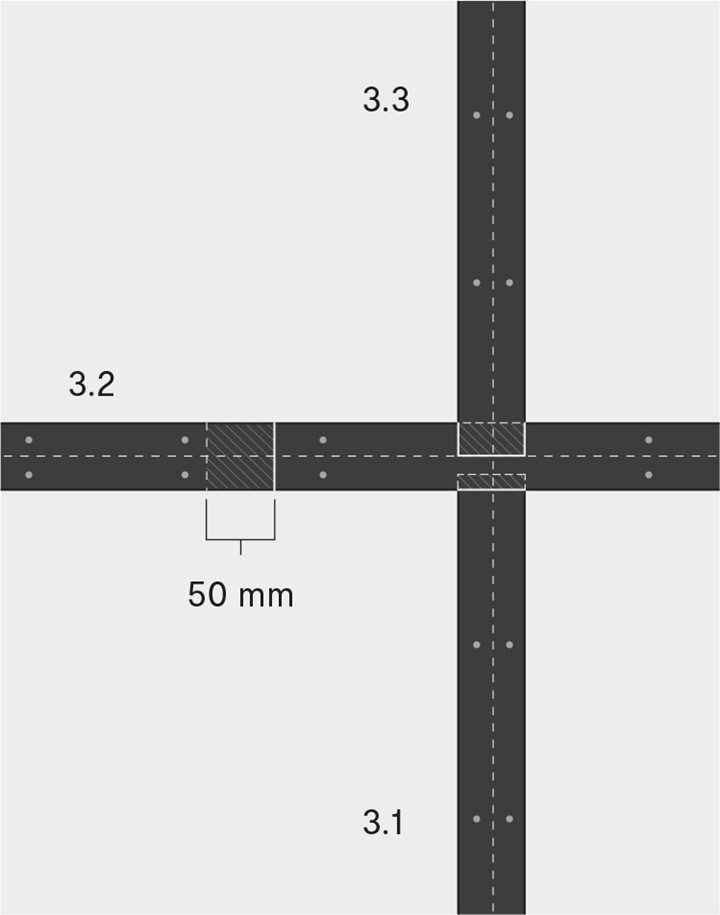
At the joint, the tape should be attached halfway on one surface and halfway on the other. No gaps should be present in the final joint connection. In case of any cross joints, overlap is made by at least 50 mm. Always start with vertical joints in the panels at the bottom of the outer wall (first floor) (3.1). Then tape the horizontal joint at the top of these panels overlapping (1/4 of the tape's width) the vertical taping (3.2) and against the wall plate/end or against the next upper row of panels (e.g., second floor). Any new upper row of panels (second floor) is taped with vertical overlapping tape (1/2 of the horizontal tape's width) (3.3). The order becomes upwards: vertical, horizontal, vertical, and horizontal, etc.
4. Implementation beam, square profile
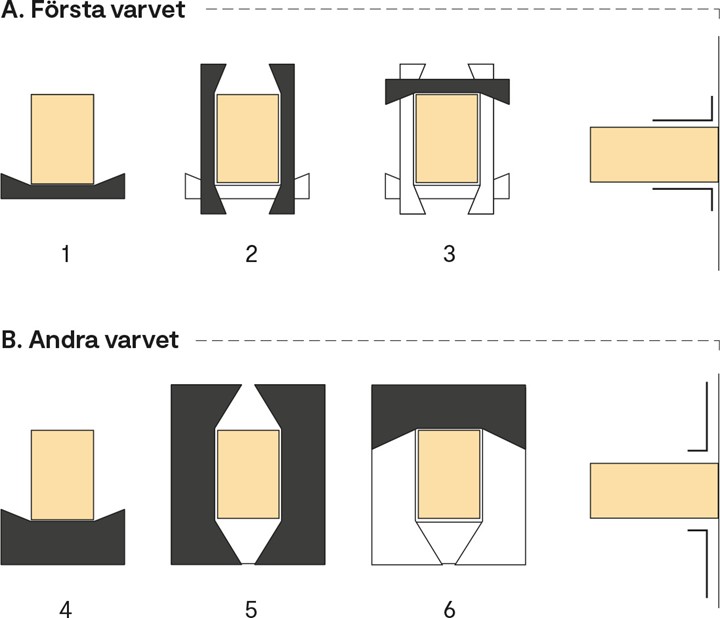
Applies to installation in windproof fabric or board. Taping is done overlapping in two rounds around the square profile with one piece of tape per edge and round. First round (A) made with 1/3 of the width of the wall surface and 2/3 on the profile/beam according to the order A.1, A.2 and A.3. Second lap (B) performed the same as the first but with 2/3 of the width on the wall surface and 1/3 on the profile/beam (B.4, B.5 and B.6).
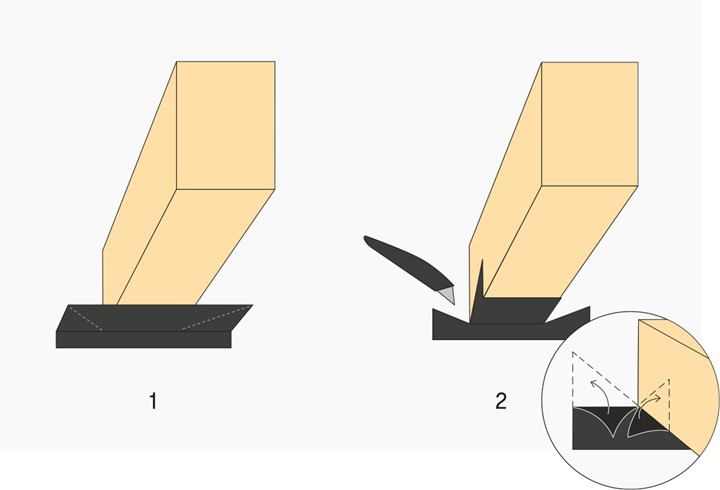
C. Cutting, folding, and overlapping
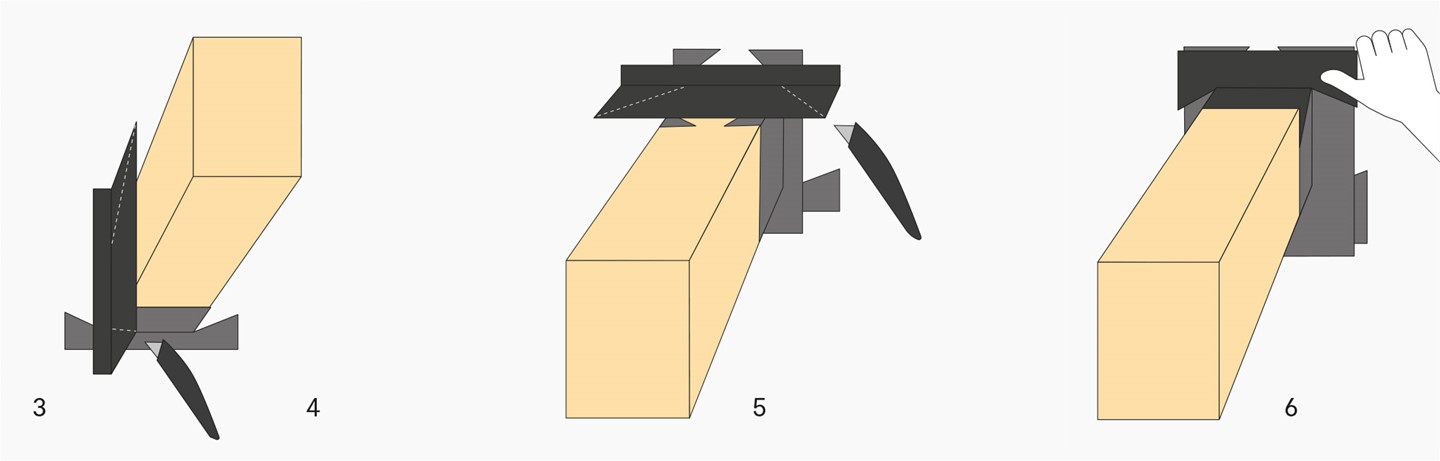
The tape pieces should, in each turn (C), completely overlap in corners and cut with a razor blade (or cut
with scissors), approximately 5 mm from the innermost opposite corner and outward – diagonally (C.1). Fold out these two tabs towards the respective surface (wall and profile/beam) with pressure (C.2). Smooth out and press the material carefully, especially in the inner corners. Then continue the same way all around (C.3, C.4 and C.5). Finish by pressing and pushing once more around the completed seal (C.6).
5. Minor damage in wind shelter
Applies to damage in wind protection fabric or board. Cut the necessary tape lengths according to the maximum length of the damage.
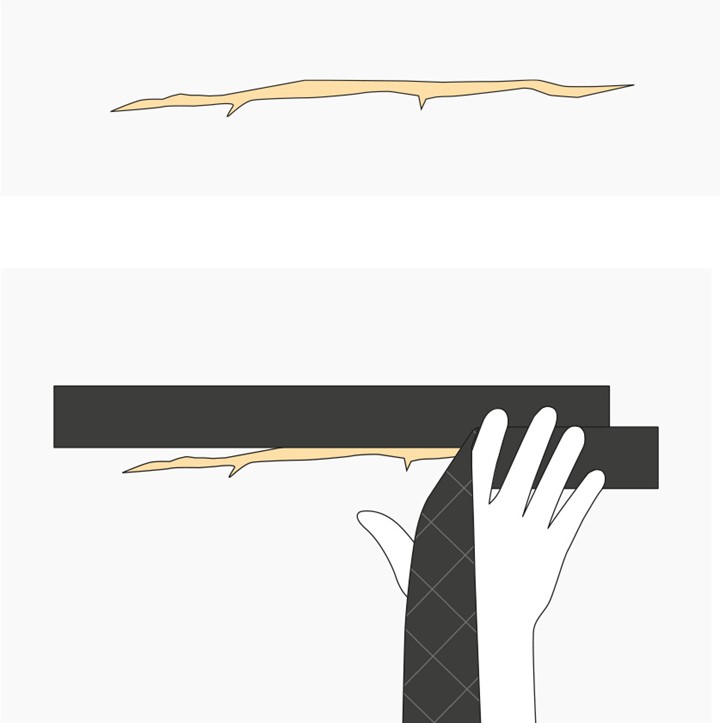
Tape the length of the injury so that overlap occurs around the injury (at least 30 mm) and possibly between the pieces of tape (at least 30mm) with overlap) Press and smooth out the tape joint. Limit fully taped damage in diffusion-open substrates such as wind barriers with maximum widths up to 100 mm and 500 mm length. If the damage is greater, repairs should be carried out according to the next point (6.) Exposed staples or nails in the windbreak are considered damage and should be taped with a piece of tape for optimal weather protection (60 x 60 mm).
6. Major damage in wind shelter
In case of damage to the wind protection fabric, cut the necessary patch piece from the wind protection fabric. Tape with customized tape pieces in single width, like seam taping, closed around the piece with overlapping corners. In case of damage to the wind protection board, replace the damaged part of the entire board (fitting the underlying frame) with new fastenings and seam tape around it.