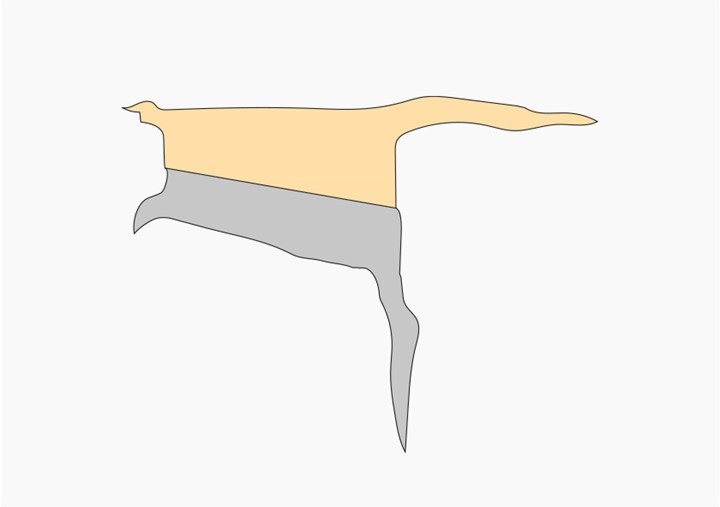
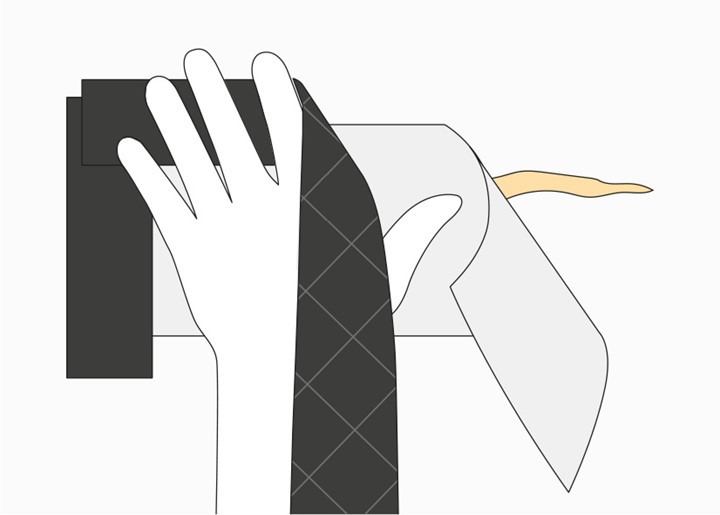
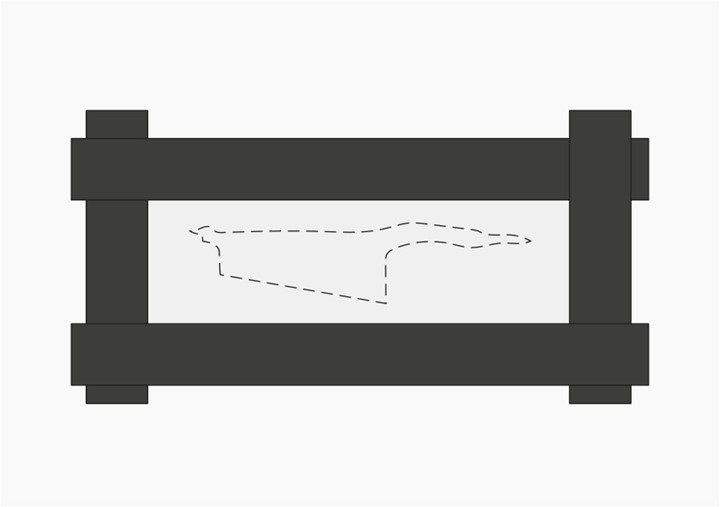
Important!
- The tape is always applied to the surface with firm and strong thumb or finger pressure. Post-processing is preferably done with a roller or plastic spatula.
- Consider movements in the substrate. These should be minimized for optimal strength and durability.
- Test the adhesion on questionable surfaces beforehand.
- Do not stretch the tape too elastically as it will always try to return to its original shape and width.
- The applicable surfaces should be clean, dry, and free from dirt, grease, and silicone. Consider the adhesion to the substrate as well as any special surface treatments.
- More porous surfaces or surfaces with reduced adhesion should be pre-treated with a substrate-compatible acrylic-based primer.
- Ensure that the current substrate is sufficiently secured according to the material's installation instructions and that the taping is not solely a load-bearing element for the substrate, but primarily a joint seal.
- When taping at lower temperatures: The tape will achieve its final strength at temperatures above +5°C. Always make sure to press firmly on the entire back of the tape during application, and never overstretch the tape at the moment. Preferably store the tape in a warm place, at room temperature, before the installation. Completely avoid taping on icy, frosty, or damp surfaces.
- To ensure aging resistance, the tape should be stored in a dry environment and protected from sunlight (UV radiation). Avoid higher storage temperatures (> +30°C).
- The product should be integrated and protected during use behind the outer facade. Maximum external UV exposure during construction is up to 12 months.
- The top edge of horizontal nail battens against the wind barrier can be taped for optimal weather/rain protection. Half of the tape's width on the batten and half on the wind barrier/wall.
- For identification, always tape up the first piece with the label visible!
1. Generell montering
Cut to the appropriate length and remove the protective film. Attach the tape to the surface carefully with pressure from the center of the tape out to both edges. For longer pieces, remove a little of the protective film first, attach and roll out while pulling off the film. Cut to the desired length. With firm pressure over the entire tape back, the best possible adhesion is achieved (preferably use a roller during installation). Always keep the first piece on the roll, including the marking label, clearly visible somewhere on it
taped object. When used on diffusion-open surfaces such as wind barriers, avoid taping wider than the tape's width or up to 75 mm. On smaller restricted areas such as connections/pass-throughs, overlapping taping is allowed up to 1.5 times the tape's width. When taping sealing gaps externally around windows and doors, see separate description (Seal Correctly, Prevent Leakage at Windows and Doors).
2. Överlappsskarv vindskyddsduk
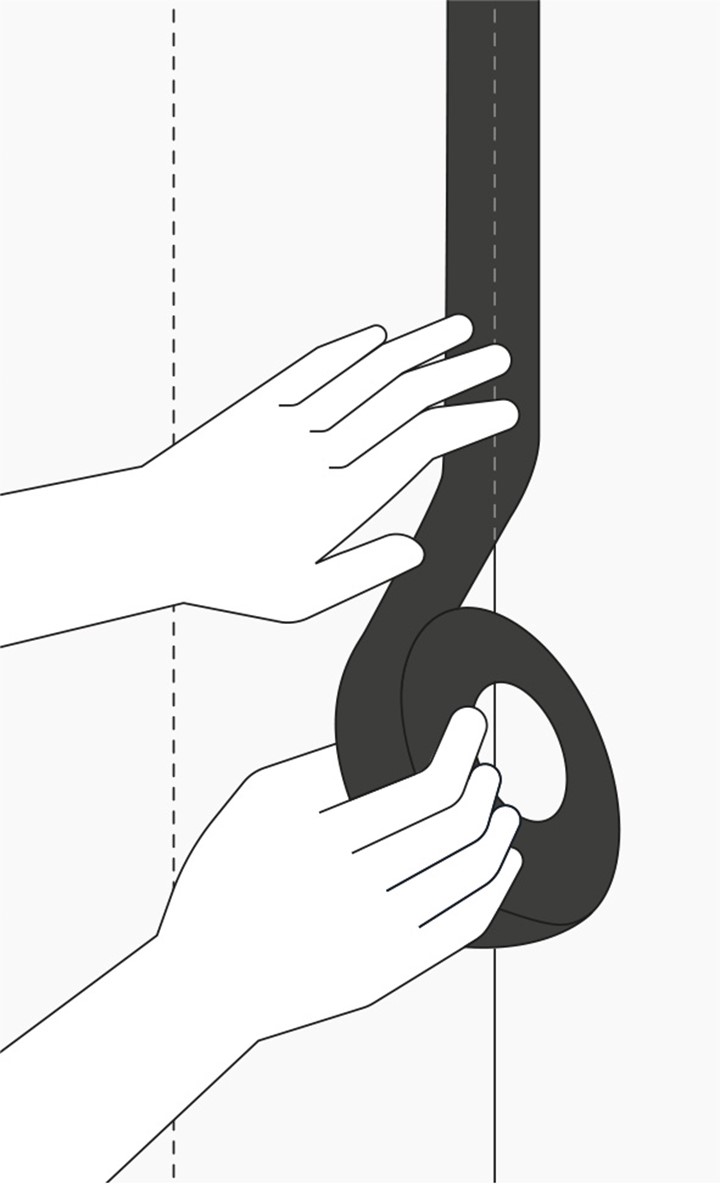
Vid skarv skall tejpen vara fäst till hälften på det ena underlaget och till hälften på det andra. Skarv skall vara överlappsskarv av duken. Inga otätheter får finnas i det slutliga skarvförbandet. Vid eventuella tvärskarvar görs överlapp av at least 50 mm. If needed to reinforce the assembly, the 1.5x tape can be applied in width or cross-taped with shorter pieces across and beyond the underlying tape (approximately 30 mm).
3. Skarv vindskyddskiva
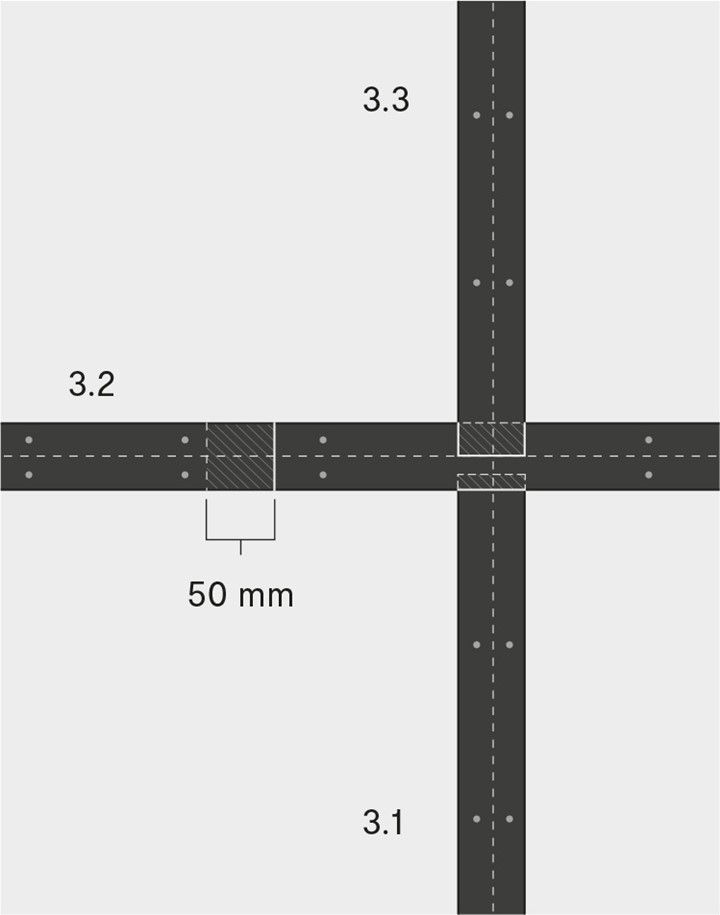
Vid skarv skall tejpen vara fäst till hälften på det ena underlaget och till hälften på det andra. Inga otätheter får finnas i det slutliga skarvförbandet. Vid eventuella tvärskarvar görs överlapp av at least 50 mm. Börja alltid med stående skarvar i skivor längst ner på ytterväggen (första våningsplan) (3.1). Därefter tejpas liggande skarv i överkant på dessa skivor överlappande (1/4 av tejpens bredd) de stående tejpningarna (3.2) och mot hammarband/avslut eller mot nästa övre skivrad (ex andra våningsplan). Eventuellt ny övre skivrad (andra våningsplanet) tejpas med stående överlappande tejp (1/2 av den liggande tejpens bredd) (3.3). Ordningen blir uppåt: stående, liggande, stående och liggande osv.
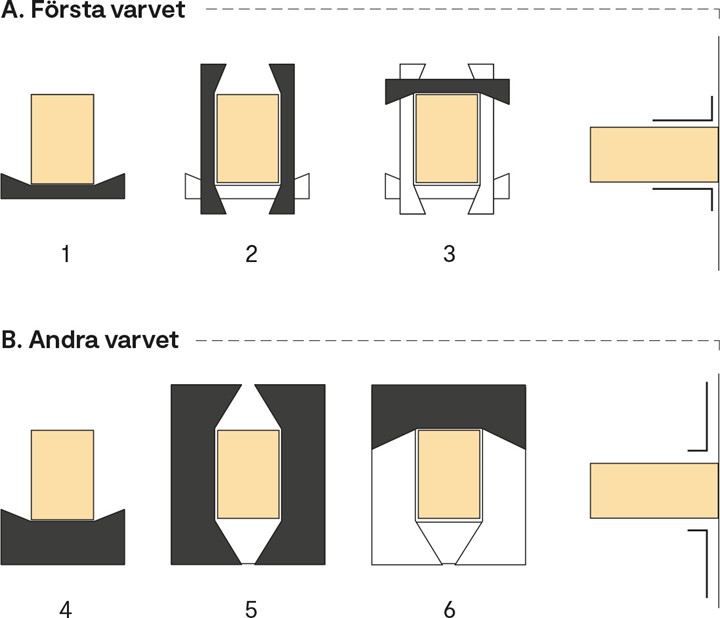
4. Genomföring bjälke, fyrkantig profil
Gäller genomföring i vindskyddsduk eller skiva. Tejpning sker överlappande i två varv runt den fyrkantiga profilen med en tejpbit per kant och varv. Första varvet (A) görs med 1/3 av bredden på väggytan och 2/3 på profilen/bjälken enligt ordningen A.1, A.2 and A.3. Andra varvet (B) utförs lika som första fast med 2/3 av bredden på väggytan och 1/3 på profilen/bjälken (B.4, B.5 and B.6).
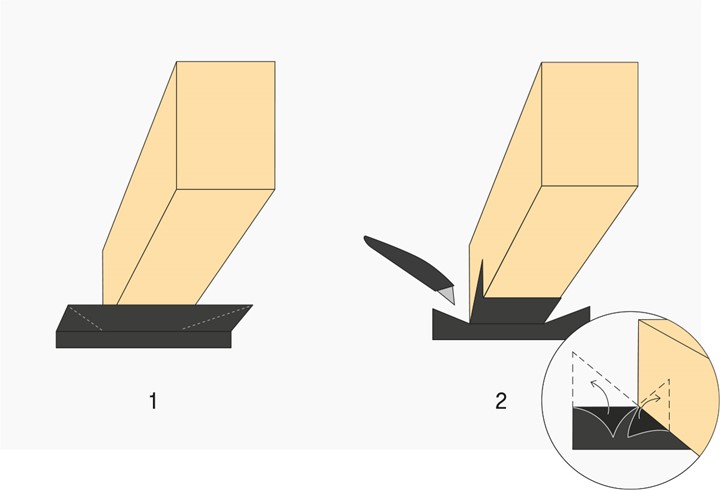
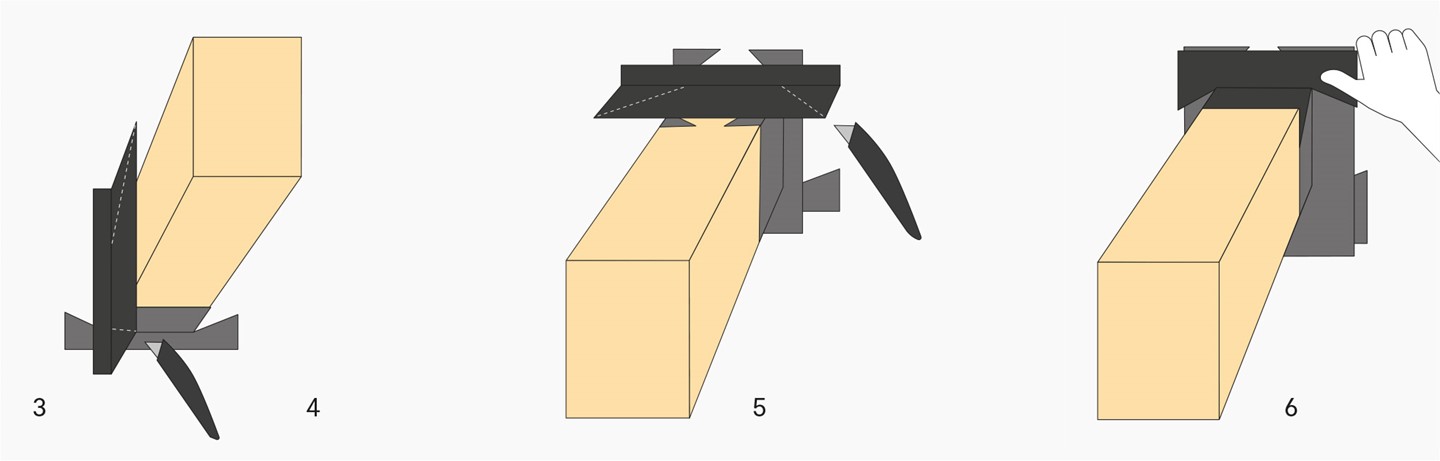
C. Cutting, folding, and overlapping
Tejpbitarna skall, i var varv (C), completely overlap in corners and cut with a razor blade (or cut
med sax), approximately 5 mm från det innersta motstående hörnet och utåt – diagonalt (C.1). Vik ut dessa båda flikar mot respektive yta (vägg och profil/bjälken) med tryck (C.2). Släta till och tryck in materialet noga och speciellt i innerhörn. Fortsätt sedan lika runt om (C.3, C.4 and C.5). Avsluta med att pressa och trycka en extra gång runt om den färdiga tätningen (C.6).
5. Mindre skada i vindskydd
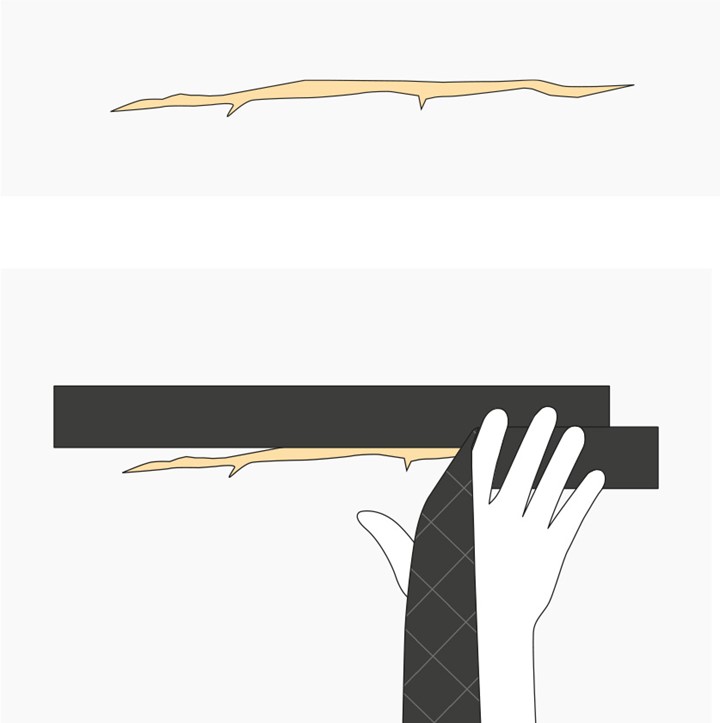
Applies to damage in wind protection fabric or board. Cut the necessary tape lengths according to the maximum length of the damage.
Tape the length of the injury so that overlap occurs around the injury (at least 30 mm) and possibly between the pieces of tape (at least 30mm) with overlap) Press and smooth out the tape joint. Limit fully taped damage in diffusion-open substrates such as wind barriers with maximum widths up to 100 mm and 500 mm längd. Är skadan större bör lagning utföras enligt nästa punkt (6.) Exponerad klammer eller spik i vindskyddet räknas som skada och skall för optimalt väderskydd skyddstejpas med tejpbit (60 x 60 mm).
6. Större skada i vindskydd
In case of damage to the wind protection fabric, cut the necessary patch piece from the wind protection fabric. Tape with customized tape pieces in single width, like seam taping, closed around the piece with overlapping corners. In case of damage to the wind protection board, replace the damaged part of the entire board (fitting the underlying frame) with new fastenings and seam tape around it.