Viktigt!
- Detaljer som överlappsskarvar, infästningar, röroch kabelgenomföringar eller exempelvis bjälkar skall lufttätas med för, den inre klimatskärmens system, godkända hjälpmedel som tejp (T-Flex), stosar, tätningsmassa eller dubbelhäftande band/ tejp. Se systembeskrivning!
- Mekanisk infästning (klammer/spik) av ångbromsen skall alltid vara galvaniserad. Infästning med klammer skall för bästa lufttäthet tejpas (med T-Flex).
- Beakta infästningen av klimatskärmen. Ångbromsen skall vara fixerad med minst centrumavståndet 600 mm på fast stomkonstruktion. Vid invik eller uppdrag tillkommer ytterligare infästning.
- Anslutningar/tätningar av ångbromsen mellan olika typer av konstruktionsmaterial, där ångbromsen är fast som exempelvis mellan trä och betong eller stål/plåt, skall ske med extra tilltagen längd av ångbromsen i veck/våg precis innan anslutningen (ca 50 mm).
- Veck i folien som möter tejpad skarv tvärs skall tätas extra med minst 200 mm tejpning över det tejpade överlappet och längs vecket (100 mm åt vart håll). Denna extra tejpning skall följa veckets botten och topp!
- En invändig klimatskärm bör alltid monteras förskjuten in i ytterväggen (maximalt 1/3 av den totala isolertjockleken). Redovisat montage bör/kan förses med en isolerad zon invändigt om ångbromsen (fungerar som installationszon för el mm).
- Den variabla ångbromsen (T-Vap Pro) skall inte användas i konstruktioner där utrymmen med permanent hög luftfuktighet tillåts (bl a badhus). Detta gäller dock inte kök eller motsvarande badrum i bostäder.
- Vid montaget och kallare årstid beakta kondensrisken på det utvändiga vindskyddets insida. Med isoleringen på plats ökar denna risk markant varför ett snabbt montage av den invändiga klimatskärmen (ångbromsen) motverkar kondensrisken.
- Användningen av Ångbromsen i takkonstruktioner är möjlig om hänsyn har tagits till kravet på genomtrampningssäkerhet. Detta avser takkonstruktioner exempelvis snedtak. Dock ej i tak mot kallvind som kan kräva ytterligare fuktutredning samt genomtrampningsskydd. Produkten skall inte användas på betongytor då alkaliebeständigheten inte är värderad.
- Ångbromsen förvaras och lagras emballerad/skyddad for solljus (UV-strålning) eller konstant högre temperaturer (>+35°C).
- Ångbromsen har fritt exponerad (ej inbyggd) ett UV-skydd som motsvarar byggtiden (< 3 månader).
Vägg
Montering av bärande innerväggar bör ske efter att man monterat ångbromsen på ytterväggen, alternativt att man monterar en remsa av ångbromsen mellan bärande innevägg och yttervägg. Tejpning av alla skarvar sker med Tätningstejp T-Flex för fullgod täthet och beständighet. Infästning och skarvning mot betong utförs med Skarvtejp T-Duo Concrete.
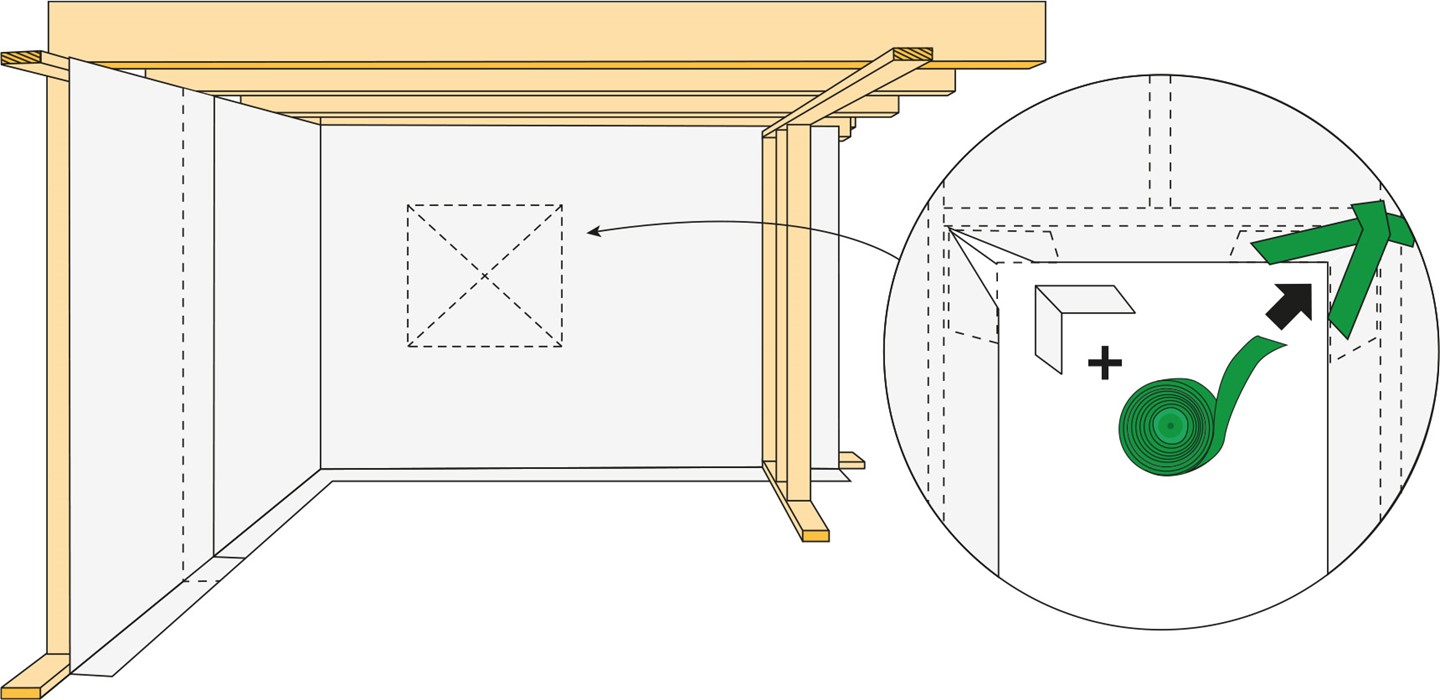
1. Rulla ut ångbromsen och kapa till önskad längd. Räkna alltid med minst 200 mm överlappning.
2. Fäst upp ångbromsen mot väggens överkant/hammarband. Överlappningen sker från taket ner på väggens ångbroms. Skarv skall vara klämd mellan regel och annan regel eller skivmaterial.
3. Fäst ångbromsen ordentligt mot väggen (med galvaniserad klammer eller läkt med minst c-avstånd 600 mm eller dubbelhäftande skarvtejp T-Duo). Ångbromsen skall avslutas så att den täcker insidan av väggens syll samt viks ut på golvet ovan golvets ångspärr med minst 200 mm för överlappning av golvets folie. Alternativt avslutas ångbromsen utan överlapp med tejp mot syllen (T-Flex) eller med T-Duo Concrete ner mot eventuell betongplatta.
4. Stående skarv skall utföras klämd över stående regel med överlappning minst 200 mm. Överlappet tejpas (T-Flex).
5. Var extra noga med infästningspunkterna runt fönster- och dörröppningar. I stomöppningar görs enklast en krysskärning (Alternativ skärning kan göras och tejpningen skall då vara motsvarande lufttät) av ångbromsen, från hörn till hörn. Ångbromsen viks sedan ut i stommens smyg och fästs med klammer eller tejp. Innan infästningen sker skall extra bitar av ångbroms (fyrkantig) med vikning placeras under flikarna i var hörn så att de täcks helt med ångbromsen! Kanter och skarvar tejpas (T-Flex). Biten av ångbromsen kan ersättas med tejp eller ark av tejp (T-Flex).
Bjälklag
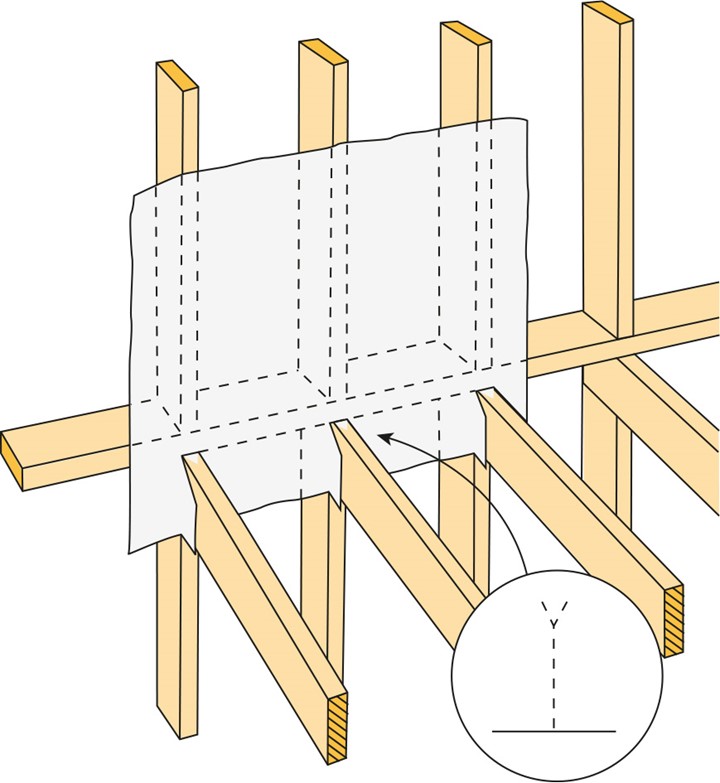
1. Skär till eller använd en lämplig storlek av ångbromsen (längd och bredd) med avseende på bjälkarnas centrumavstånd. Rullningen skall ske uppifrån och ner. Anpassa måttet på ångbromsen så att den slutar vid bälklagets underkant. Underifrån skall den underliggande våningens ångbroms dras upp och överlappa lika.
2. Fäst med klammer och börja vid en stående regel/stödben. Låt en flik om minst 100 mm sticka ut på var sida om yttersta reglarna (stödbenen).
3. Ångbromsen viks ut på bjälkarna i bjälklaget och Y-skärs for att vikas ner i mellan. Fixera och klamra varje flik runt bjälkarna.
4. Täta/tejpa runt varje bjälke noga med Tätningstejp T-Flex. Samtliga överlapp och skarvar utförs med tejpning (T-Flex).
Alternativ montering sker med Tecca Bjälklagstätning Bjälklagstätning för bl.a. fuktskyddande lösningar - TECCA