T-Expand Pro
Expanderande drevband för fogning och tätning
during the new installation of windows and doors.
Important!
- At the bottom of the opening, we recommend the use of a so-called secondary seal (underlying sealing layer) such as Flexseal-T. The tape is intended to protect the frame and is installed before the window or door installation.
- The applicable surface must be clean and dry, free from loose particles, grease, or silicone. The joint surfaces should be even and smooth.
- Columns should be parallel and perpendicular in depth to avoid angled surfaces. Some irregularities can be absorbed by the tape, but longer lines with angles and slopes inward or outward result in insecure fixation of the tape.
- In stone/brick facades with uneven joint surfaces, the joints should be filled and smoothed to achieve flat surfaces.
- Mount the strip a few millimeters into the gap so that pressing or dripping water on the outside is not directed straight into the strip.
- Vid kallare monteringstemperatur (och/eller vid låg luftfuktighet) kan expansionstiden avsevärt
extend. Up to several days in some cases. Elevated temperature (and humidity) or gentle heating accelerates the process. To increase the expansion time, in warm weather, the tape can be stored cold before assembly. - After cutting the tape to the correct length, reseal the roll with tape or a locking clip at the tape end.
- For optimal sealing, complete and seal with T-Fix sealant in every corner and joint. This can be done from the outside or inside after full expansion.
- Rolls should be stored protected from heat and sunlight.
1. Generell montering
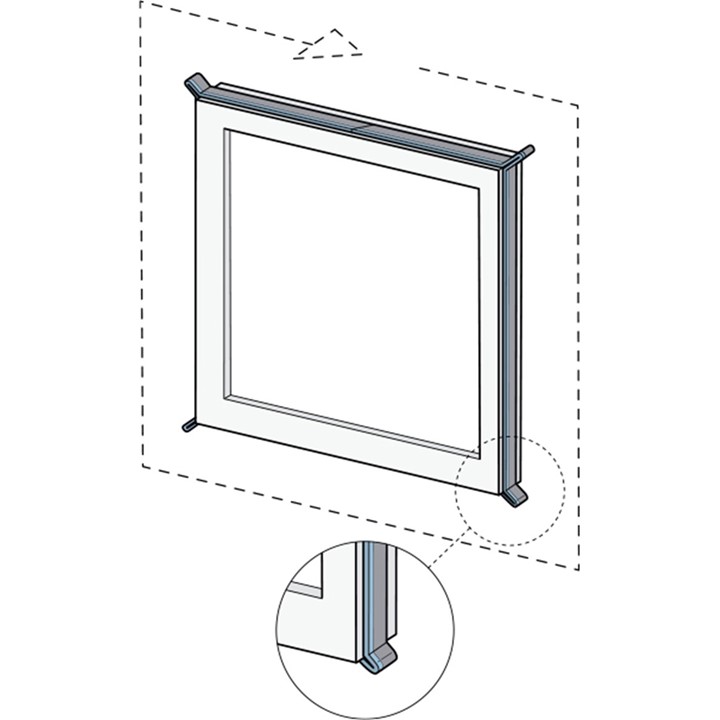
Ensure the correct tape has been selected by measuring the available installation space in the wall/roof. Compare with the frame size to be installed. The gap around the frame is also the expansion area of the sealing tape. The interior surfaces of the installation space should be even, smooth, dry, and clean. The pre-compressed sealing tape is released from the roll. Application is done with the adhesive tape down towards the frame and best around the entire frame with "loops" at each corner.
2. Drevbandets placering
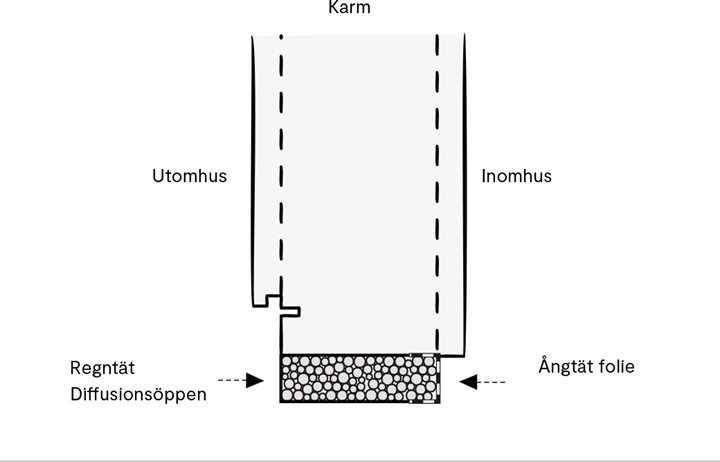
Consider the design and bottom of the frame. The foil side of the sealing strip is vapor-tight and should be placed towards the inside of the frame. The opposite side constitutes the outside with rainproof protective properties and should be aligned as close to the outside of the frame as possible. Any connection grooves for flashing at the front edge and bottom guide the placement. Also, ensure that the frame screws (attachment points) do not affect and damage the vapor-tight foil edge of the sealing strip!
3. Start klistring
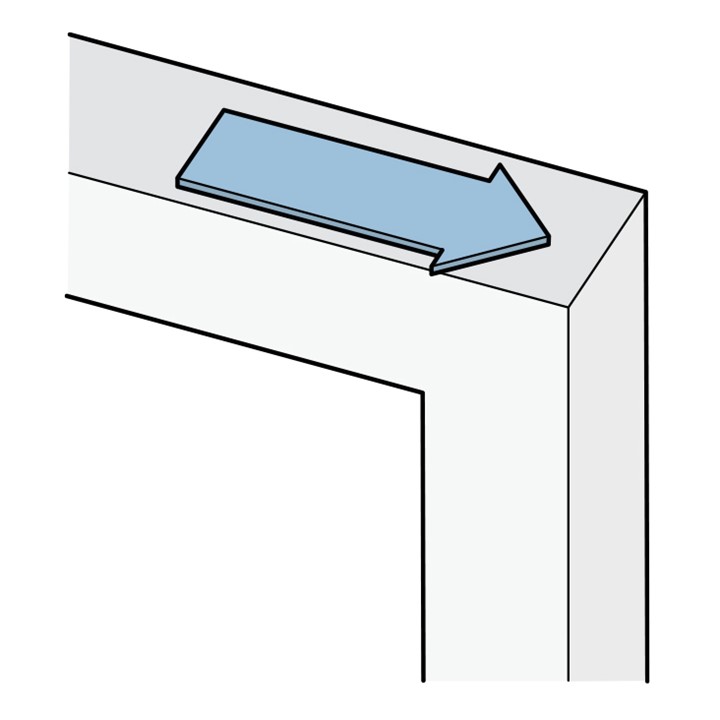
Ensure that the frame is dry, dirt- and grease-free. The tape on the underside is released from the protective paper strip as the adhesion of the sealing strip progresses. Start somewhere in the middle of the top of the frame along the predetermined installation line towards the outside. Press the strip firmly.
4. Hörn
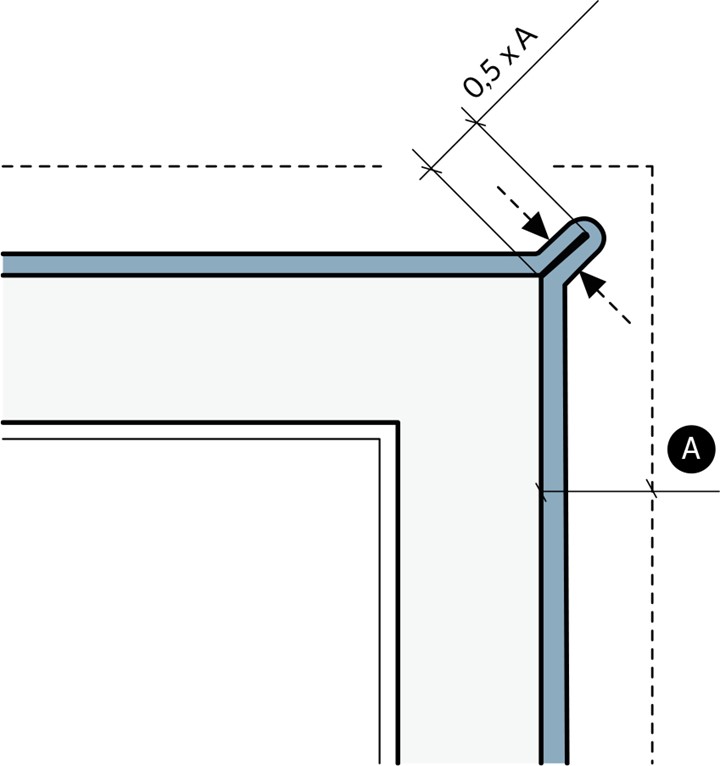
At the corners, a compressed "loop" is created with a protruding length of approximately 0.5 x the joint/gap measure (A), not less (referring to the double-folded adhesive surface). The loop is pinched extra at the top and towards the frame corner. Set out 45° for installation.
Cut off the first and last 3 cm of the entire roll. Measure the desired length and cut. Always calculate a few extra cm per meter as a reserve before installation.
5. Avslutning klistring
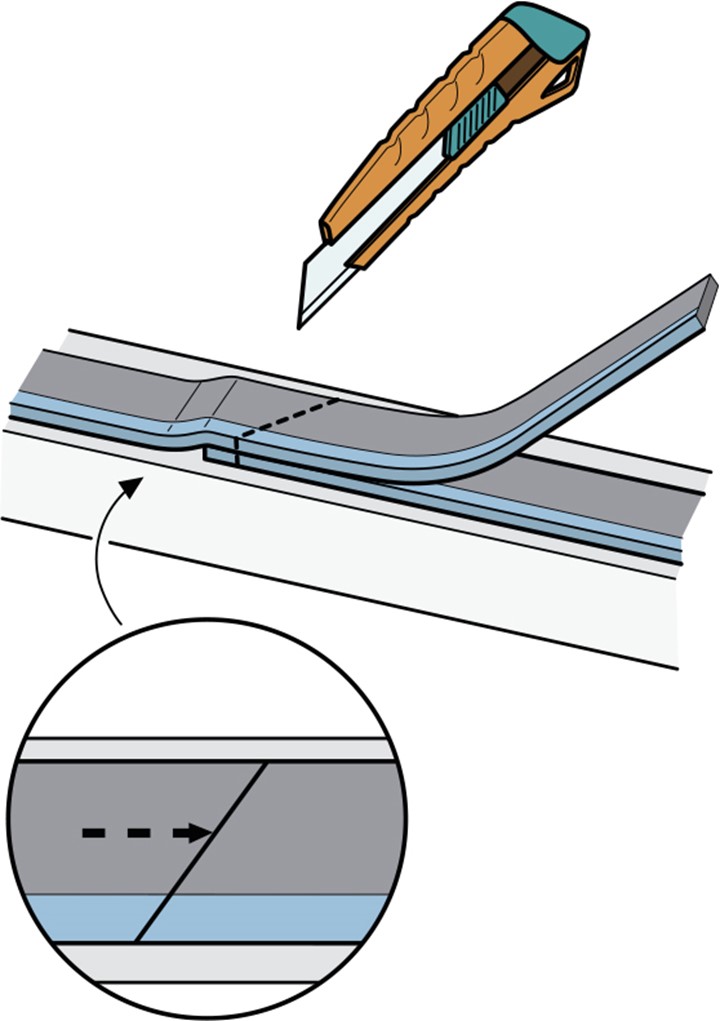
Leave the protective paper in place for the last decimeter up to the starting point of the strip. Go up on the starting piece about 10 cm along. Cut with a utility knife at about 45° diagonally forward through both strips. Dispose of the smaller lower end piece and fit together the two remaining end pieces of the strip. Press both tightly together carefully. Seal any remaining unused roll.
6. Anpassning av upplag
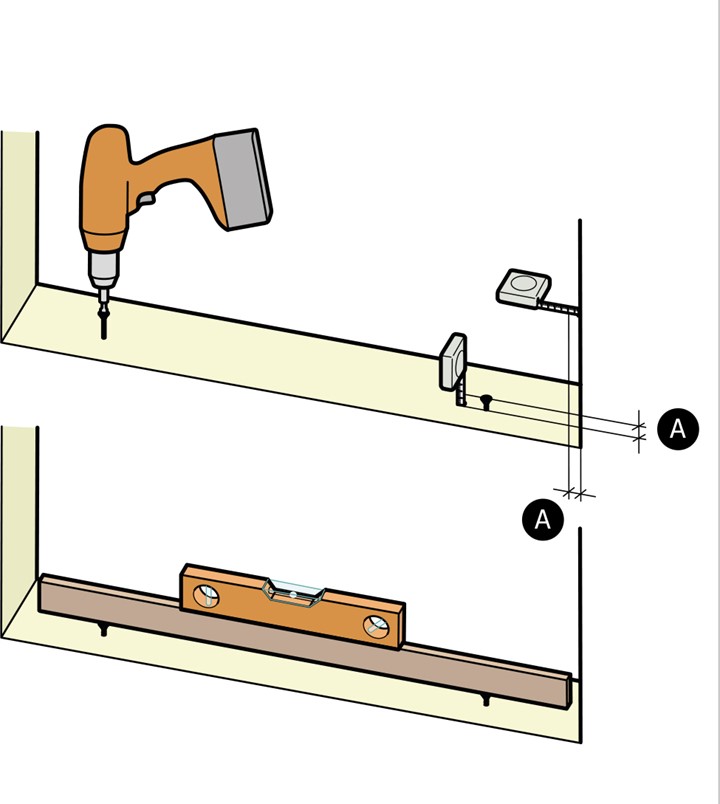
Arrange supports with screws on both sides of the bottom as suggested. The height is adjusted within the current joint/gap measurement (A). Adjust using a spirit level and straightedge.
7. Inplacering och fixering
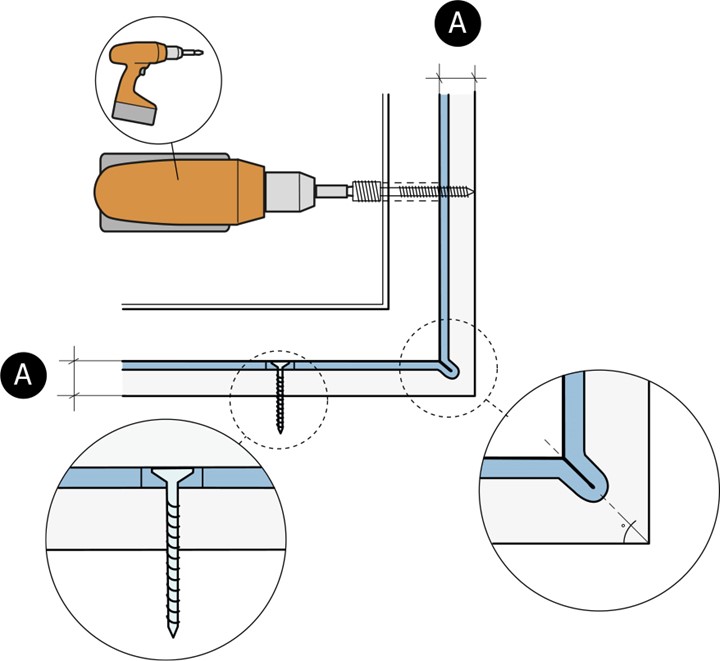
Adjust the frame laterally according to the joint/gap measurement (A). At the support points under the sealing strip, cross with a utility knife or cut around (a must at block supports). Secure with frame screws on the sides. The screwing is done through the sealing strip. Ensure that the "corner loops" of the sealing strip are fixed and point approximately 45° towards the corners.
8. Alternativ bottenanslutning
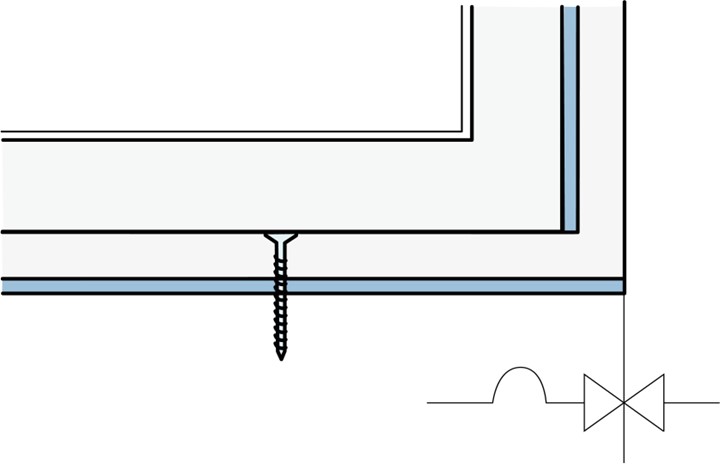
As an alternative bottom connection, the two lower "corner loops" are excluded, and the strip on both sides ends in a direct line with the bottom of the frame. Glue a sealing strip to the bottom at the marked position, which is 5 mm longer on each side (total + 10 mm), and press/push down carefully into the corner angles. No gaps should occur! Mount/screw the support screws down through the sealing strip. Adjust and level according to 6 and 7.
9. Expansion och avslutning
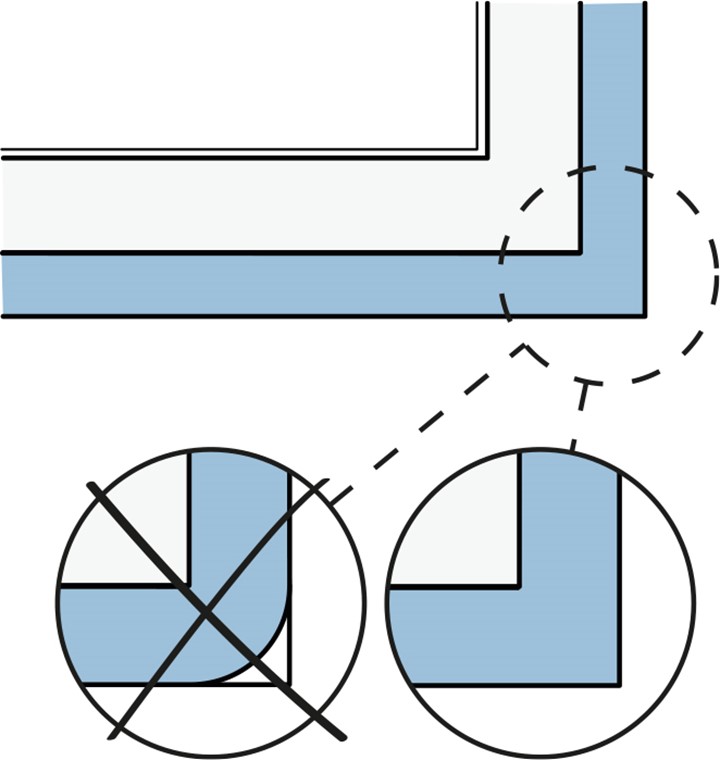
Check corners and joint/gap dimensions after final fixation. The sealing tape now expands on its own depending on humidity and temperature. After full expansion and in case of any leaks, these can be sealed with T-Fix sealant. The same applies to the foil joints on the tape where the installation started. Alternatively, the foil joint can be taped before the sealing tape expands.