T-Expand Standard
Expanderande drevband för fogning och tätning vid
new installation of windows and doors.
Important!
- I botten av öppningen rekommenderar vi användningen av en s k sekundärtätning
(underlying waterproofing layer) like Flexseal-T. The tape is intended to protect the frame and is installed before window or door installation. - The applicable surface must be clean and dry, free from loose particles, grease, or silicone. The joint surfaces should be even and smooth.
- Columns should be parallel and perpendicular in depth to avoid angled surfaces. Some irregularities can be absorbed by the tape, but longer lines with angles and slopes inward or outward result in insecure fixation of the tape.
- In stone/brick facades with uneven joint surfaces, the joints should be filled and smoothed to achieve flat surfaces.
- Mount the strip a few millimeters into the gap so that pressing or dripping water on the outside is not directed straight into the strip.
- At colder installation temperatures (and/or at low humidity), the expansion time can be significantly extended. Up to several days in some cases. Increased temperature (and humidity) or gentle heating accelerates the process. To increase the expansion time, the tape can be stored cold before installation.
- After cutting the tape to the correct length, reseal the roll with tape or a locking clip at the tape end.
- For optimal sealing, complete and seal with T-Fix sealant in every corner and joint. This can be done from the outside or inside after full expansion.
- Rolls should be stored protected from heat and sunlight.
- Consider the length shrinkage of the tape when removing the protective paper. After calculating the total length, add +2% extra as compensation.
Verktyg och tillbehör
- Ruler or measuring tape
- Knife or scissors
- Sealant T-Fix
1.
Remove loose dirt and debris in the window opening. Masonry with joints and rough surfaces should be leveled. Also clean from dust, oils, and other dirt.
2.
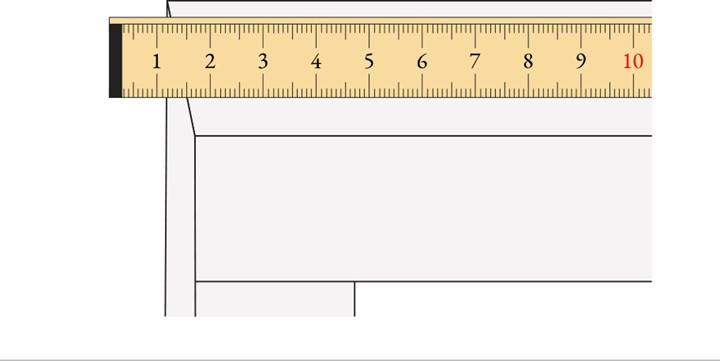
Measure the entire opening. Determine the maximum gap that occurs between the window and the opening. Check that the appropriate tape has been selected for the current gap. Determine the length of the tape from the individual sides of the window frame. Consider the corner finishes. To calculate the consumption of the sealing tape, account for the window's perimeter and add approximately 30 mm for each corner. After the calculated total length, add +2% extra as compensation for length shrinkage.
3.
Use the recommended fastenings and any supports for adjustment and load-bearing from the window supplier. For supports such as blocks/leveling screws at the bottom or wider frame fastenings, cut around and remove part of the tape. Alternatively, the leveling screw can be reversed and screwed into the tape with the head downwards. For supports at the bottom, generally, for the tape, leveling screws are preferred.
4.
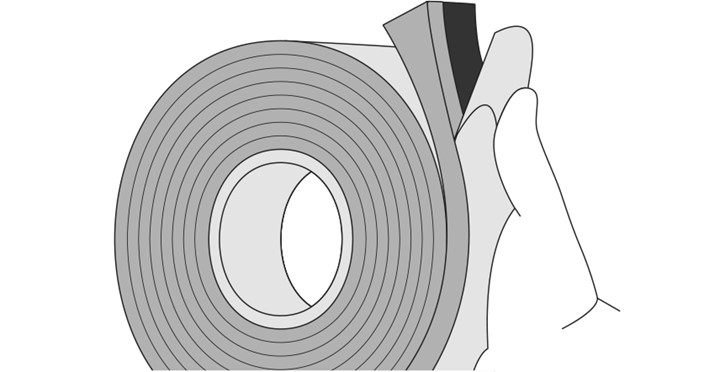
Open the roll by removing the locking tape around the roll. Cut off the first and last 3 cm of the entire roll. Measure the desired length and cut. After cutting the tape to the correct length, reseal the roll with tape or a locking clip.
5.
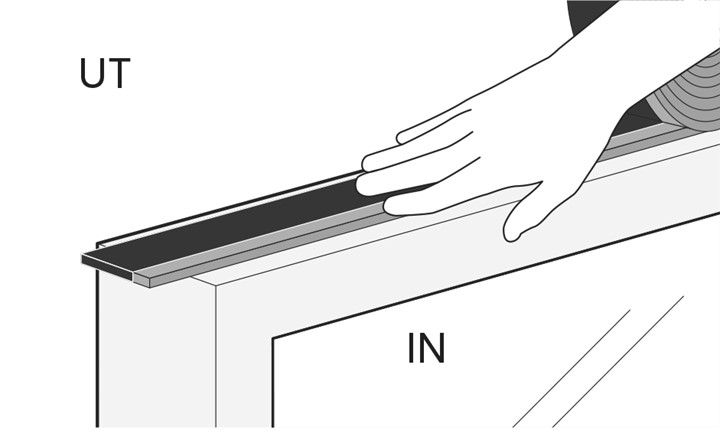
Remove the protective film from the underside of the tape. Start at the corner, extend the tape as much as the gap measurement plus approximately 3 mm more. Ensure that the gray inside of the tape is facing the inside of the window.
6.
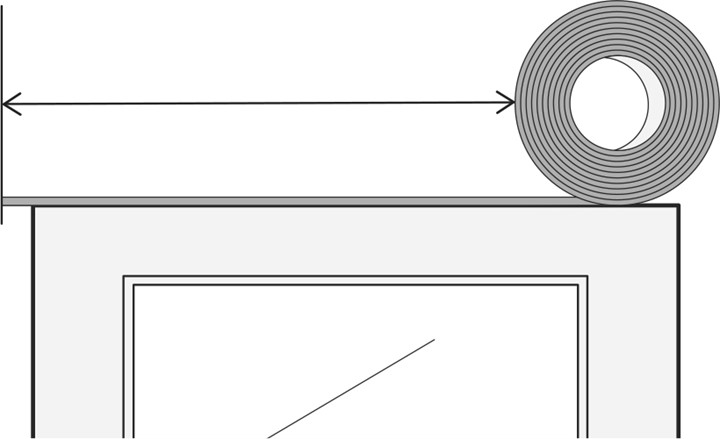
Press the tape firmly, with the adhesive side down, against and along the frame. The placement of the tape should be with the black side/edge of the tape approximately 1 mm from the edge of the frame towards the outside (window's exterior). Press firmly at the finishing corners.
7.
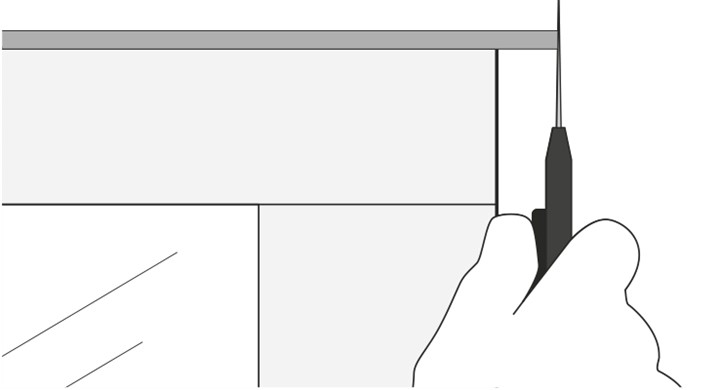
The expanding drive band should be finished protruding at the corners to ensure the corners are sealed. To achieve this, extra length should be added to the terminating end towards the corner. The extra length is the gap measurement, plus approximately 3 mm additional.
8.
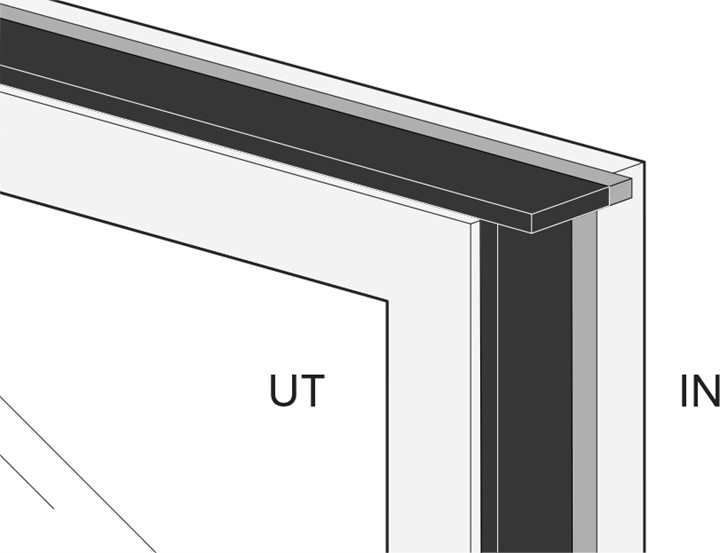
Mount the drive belt on both sides of the window tightly against the underside of the protruding band above. Allow for an extra +3 mm so that the joint is tight, both at the top and bottom.
9.
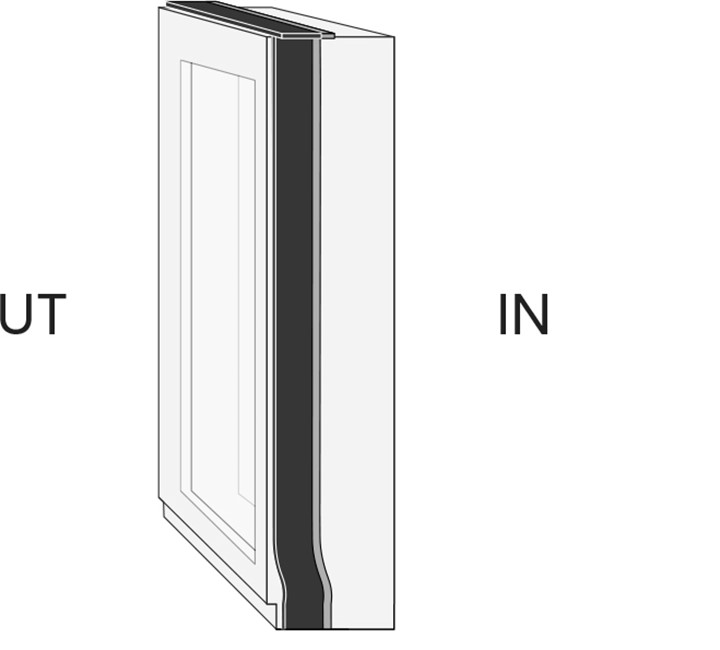
Ensure that the two strips on the window's frame sides follow the outside of the window but are adjusted and possibly curve slightly backward in the position of the frame width. This is to account for the window frame's tracking at the lower front edge for flashing/sheet metal.
10.
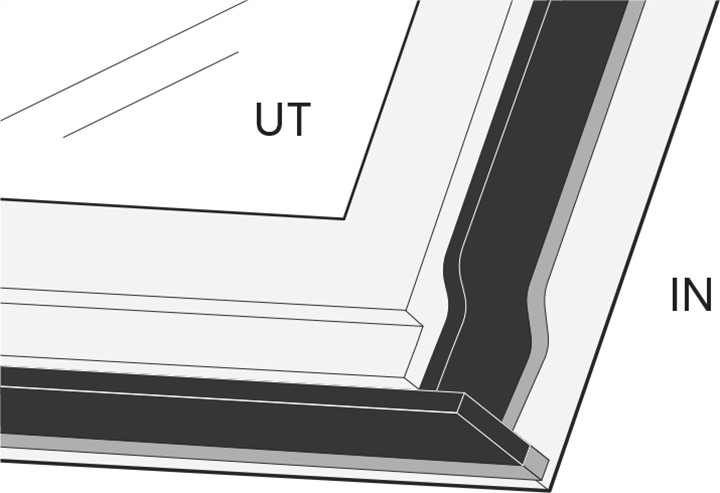
Finish the strips on both sides of the window without protrusion. The strip at the bottom should be mounted like the top with protrusion on both sides to achieve tight corners. The extra length is the gap measurement, plus approximately 3 mm additional. The strips should meet at the corners, if the drive strip on the sides has been retracted to account for the flashing, the strip at the bottom should also be moved in by the corresponding width.
11.
Holes for the frame screws should be drilled in the strip depending on the size of the screw. The holes can be drilled through the still compressed and assembled strip.
12.
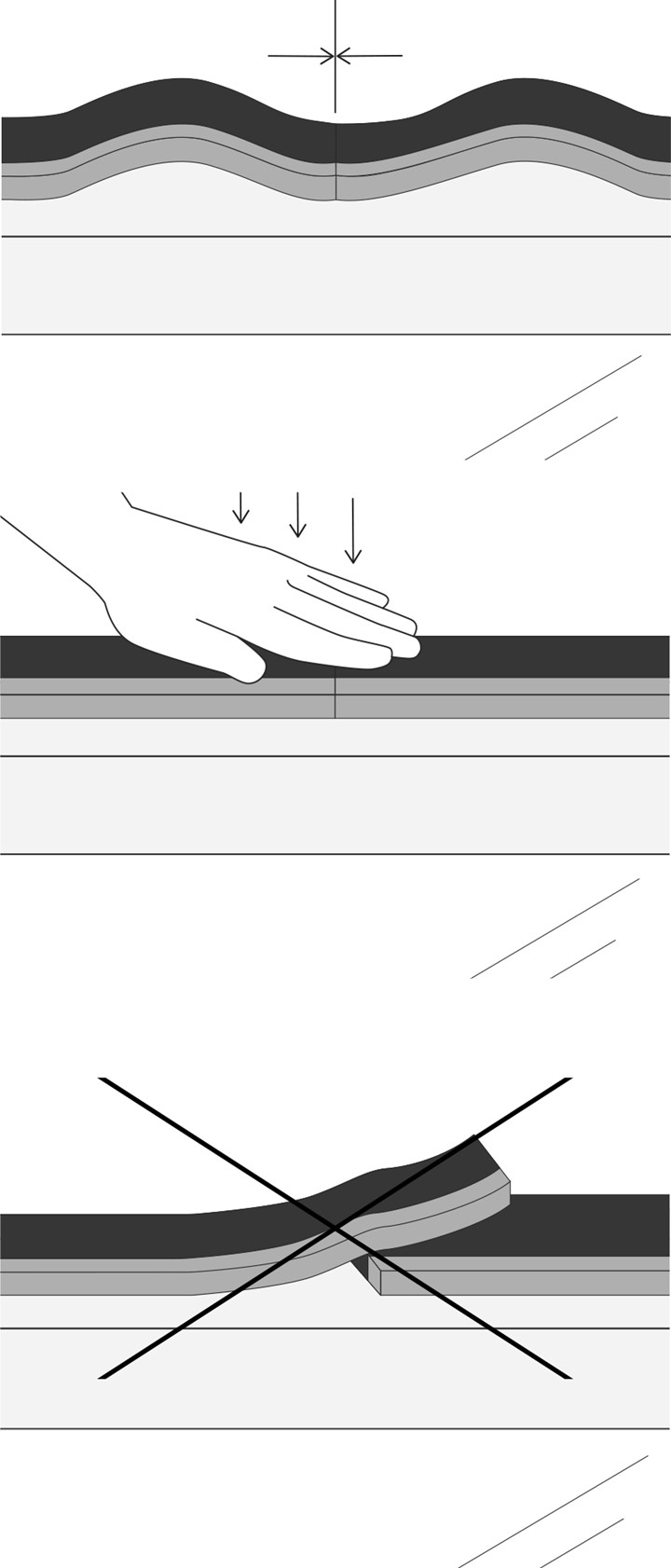
The expanded drive belt can be spliced lengthwise if needed. Cut both ends straight and add an extra 10 mm in length. Force down and press the ends firmly against each other to form a tight joint.