Important!
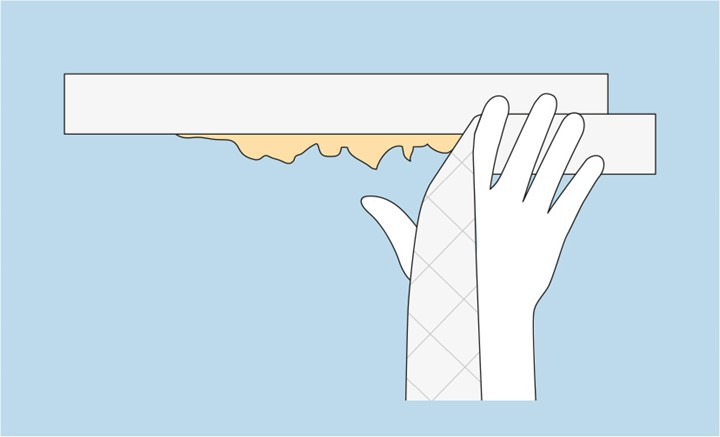
- The tape is always applied to the surface with firm and strong thumb or finger pressure. Post-processing is preferably done with a roller or plastic spatula.
- Note that movements in the substrate should be minimized for optimal durability and test the adhesion on the substrate before installation.
- The surface should be clean (consider surface treatments), grease-free (silicone-free), dry, and smooth. Follow the recommended working temperature for best results.
- Do not stretch the tape too elastically as it will always try to return to its original shape and width.
- Consider forces and movements in the underlying foil (or membrane). Especially free-hanging and non-fixed substrates where temperature fluctuations (e.g., temporary higher temperatures during construction) can create tensions and movements in the tape joint due to the influence of self-weight!
- Ensure that the base is properly secured and fixed according to the accompanying installation instructions or reinforce the taping (support tape, wider tape) corresponding to the additional load that may occur!
- When assembling in lower temperatures, the tape should be stored in a warm storage before assembly for the best assembly results.
- When taping at lower temperatures: The tape will achieve its final strength when the temperature is above +5°C. The assembly and application against the surface should be compensated with higher pressure! In general, tape applications should be free from tensile stress. This should be particularly considered at low processing temperatures.
- To ensure aging resistance, the tape should be stored or installed in the operating environment protected from sunlight (UV radiation) and not exposed to temperatures above +35°C.
- For identification, always tape up the first piece with the label visible!
1. Installation
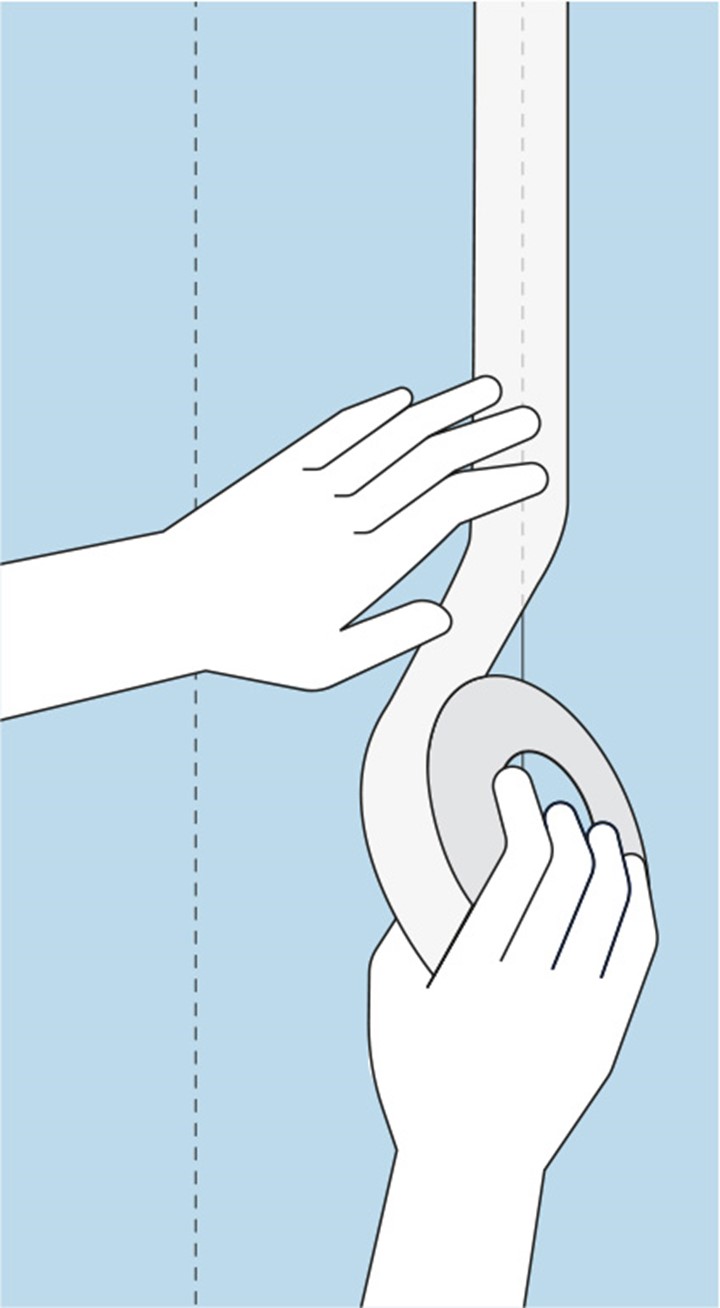
Cut to the appropriate length and remove the protective film. Attach the tape to the surface carefully with pressure from the center of the tape out towards both edges. For longer pieces, remove a little of the protective film first, attach and roll out while pulling off the film. Cut off at the desired length.
With firm pressure across the entire tape, the best possible adhesion is achieved. Always ensure the first piece on the roll, including the marking label, is clearly visible somewhere on the taped object.
2. Overlap joint
At the joint, the tape should be attached halfway on one surface and halfway on the other. No gaps should be present in the final joint connection. To reinforce the assembly, several strips of tape can be applied side by side or cross-taped with shorter pieces across and beyond the underlying tape (approximately 30 mm).
3. Conduits for cables/hoses
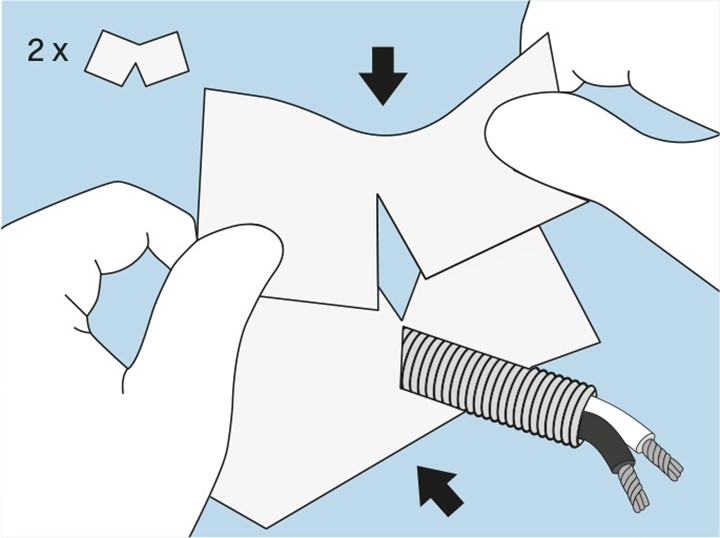
Use at least two shorter pieces of tape (100 mm + diameter). Cut a slit halfway through the width in the middle of the tape. Place the first piece of tape with the slit against the cable/hose and press firmly. The next piece of tape meets the opposite side and overlaps. Press out towards the foil and around the pass-through. If there is any doubt about the seal around the pass-through, add more pieces of tape.
4. Beam Penetration
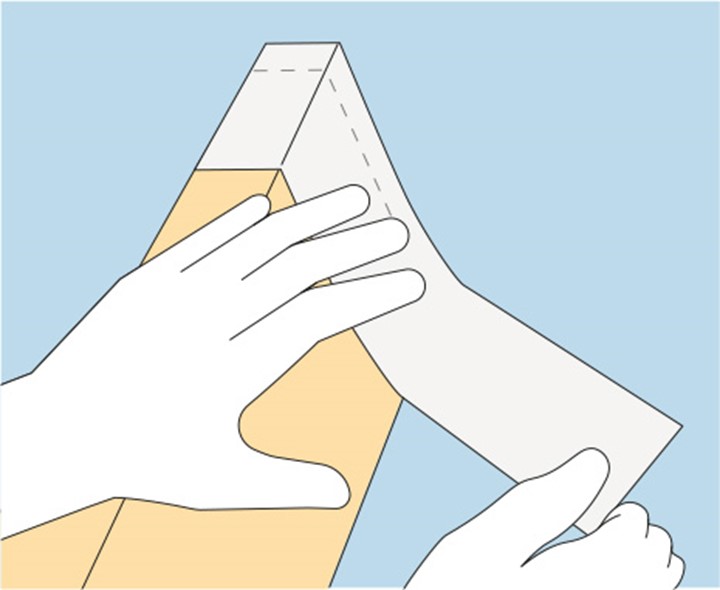
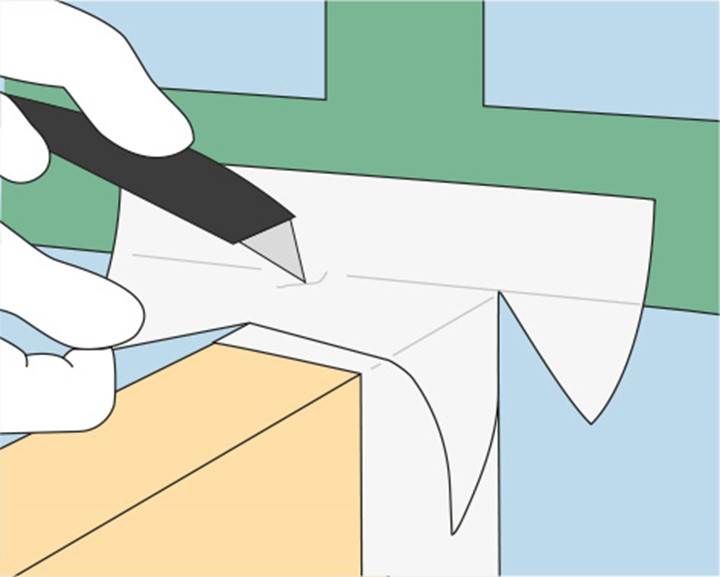
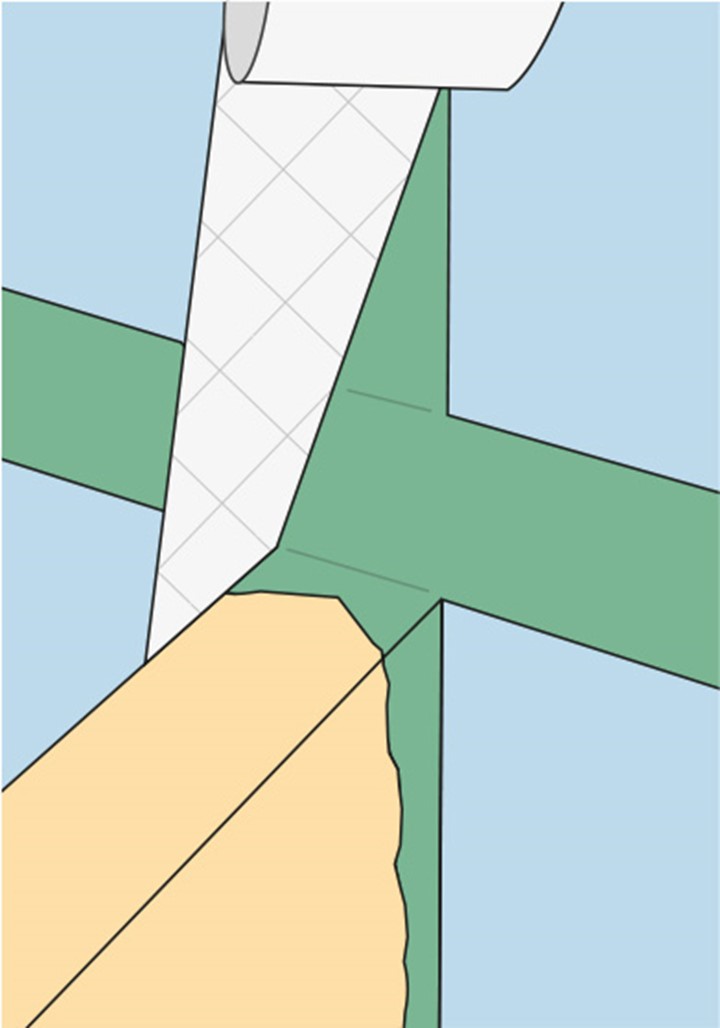
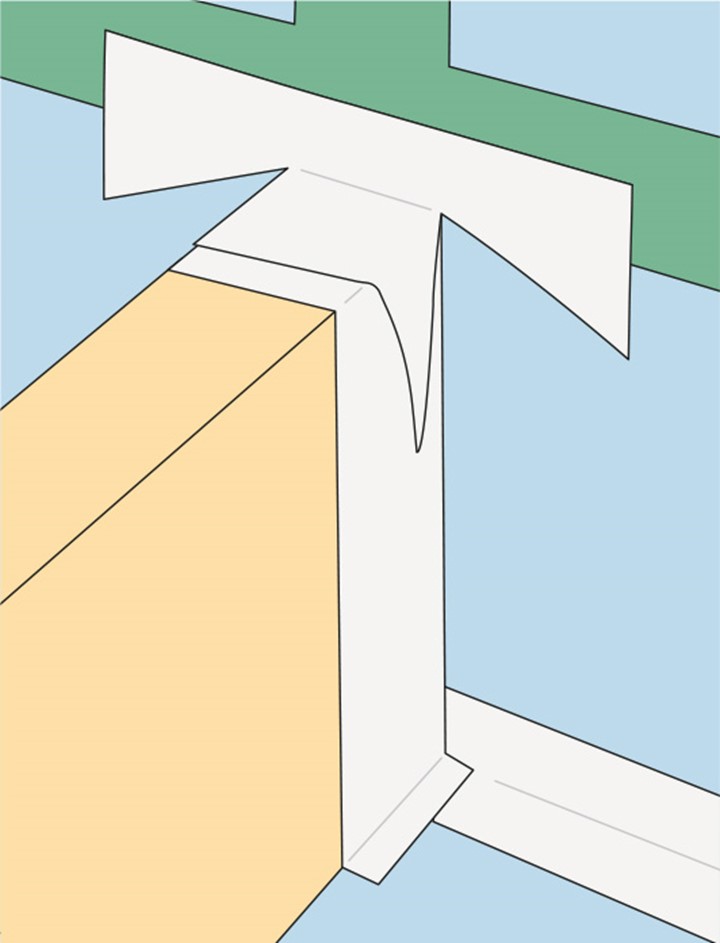
Cut the foil (membrane) with the smallest possible incision (corresponding to the height of the beam). Tape around the beam with the foil clamped in between. Finish with an angled taping that extends about 30 mm on each side of the beam's height edge. Bevel cut from the inner corners out towards the lower corner of the short side. Fold down on both edges, finish by pressing the tape joint firmly.
5.
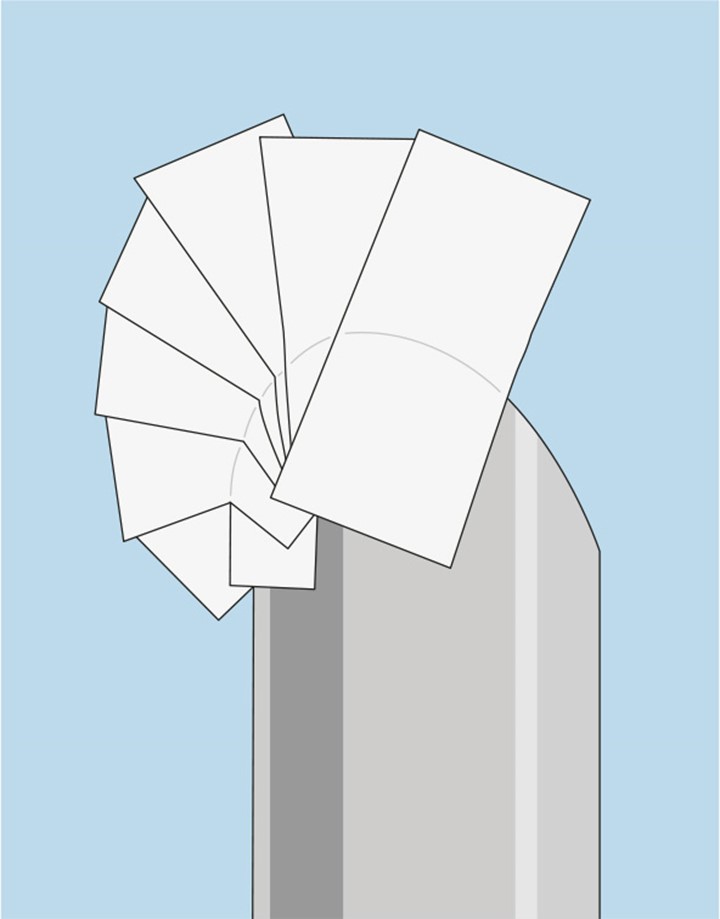
Tape with shorter pieces (approximately 150 mm) in the direction of the pipe and with half the length on each construction part, as well as overlapping from tape to tape. Press the tape joint firmly.
6. Damage foil
Cut the necessary tape lengths according to the maximum length of the damage. Tape the length of the damage so that overlap occurs around the damage and between the tape pieces arbitrarily. Smooth out the tape joint. If necessary, transverse lengths can finish the joint for better strength