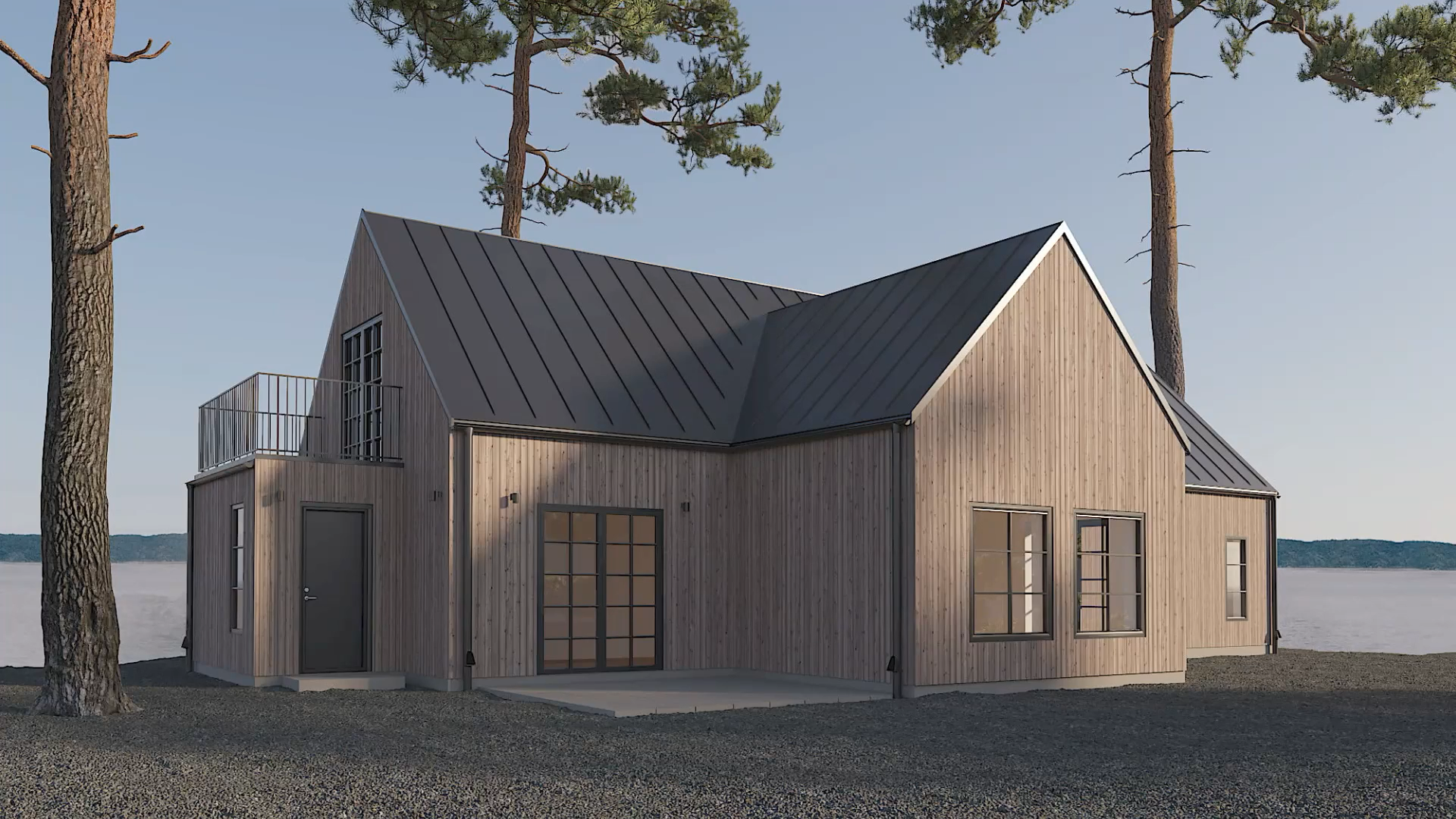
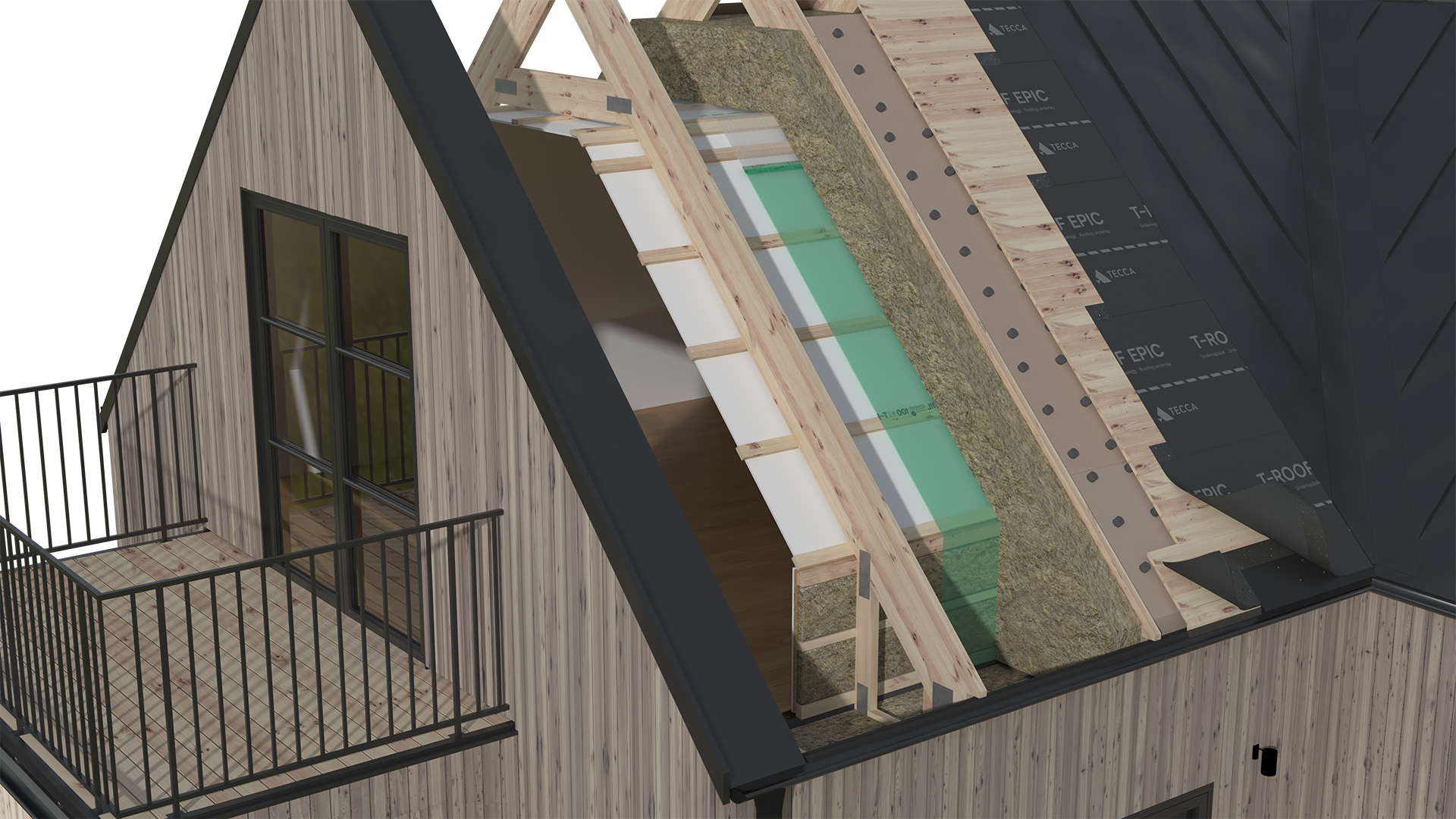
The internal climate screen prevents moist and warm air from penetrating the outer roof's insulation and structure.


The external climate shield in the roof creates a windproof shell that also dries out any moisture from the roof's insulation and construction.


The roof underlayment is the outer roof's lower water-repellent layer. Its primary function is to act as weather protection during construction and secondarily as extra protection during use.


Water-repellent bitumen membrane on balcony.

The outer roof is the roof's external water-repellent layer. Its primary function is to provide weather protection throughout its service life, and secondarily to be aesthetically and architecturally pleasing.


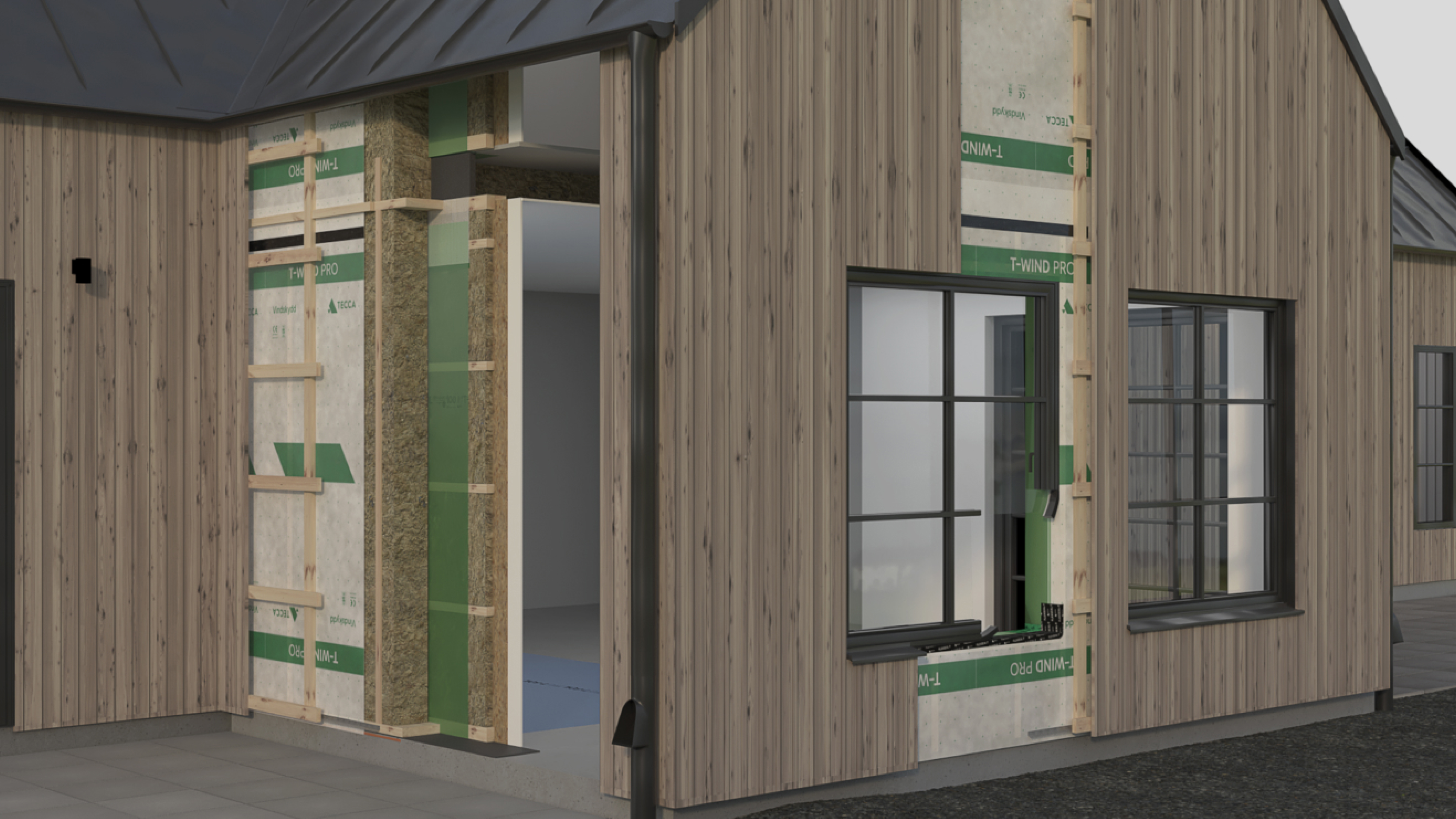
The interior climate screen prevents moist and warm air from penetrating the outer wall's insulation and structure.


The external climate shield in the wall creates a windproof shell that also dries out any moisture from the outer wall's insulation and construction.


When installing windows or doors, it is important to seal and insulate. This way, you avoid heat loss and prevent moisture from seeping into the structure. There are two methods for sealing and insulating: an all-in-one solution with expanded sealing strips and a traditional mineral wool insulation with tape.


Sill insulation is tasked with protecting the wall's or floor's sill from the foundation's moisture. It also creates an airtight seal.


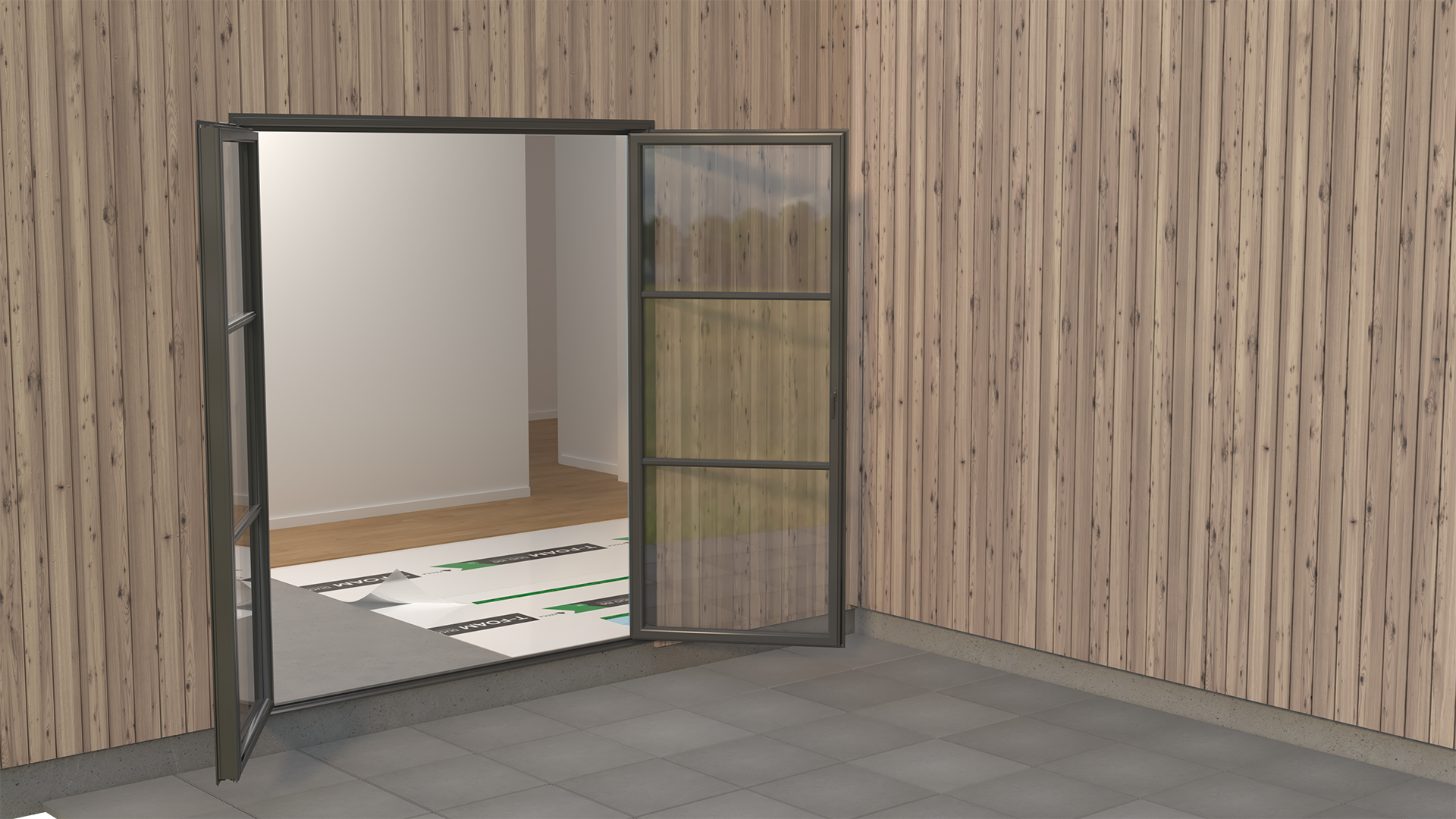


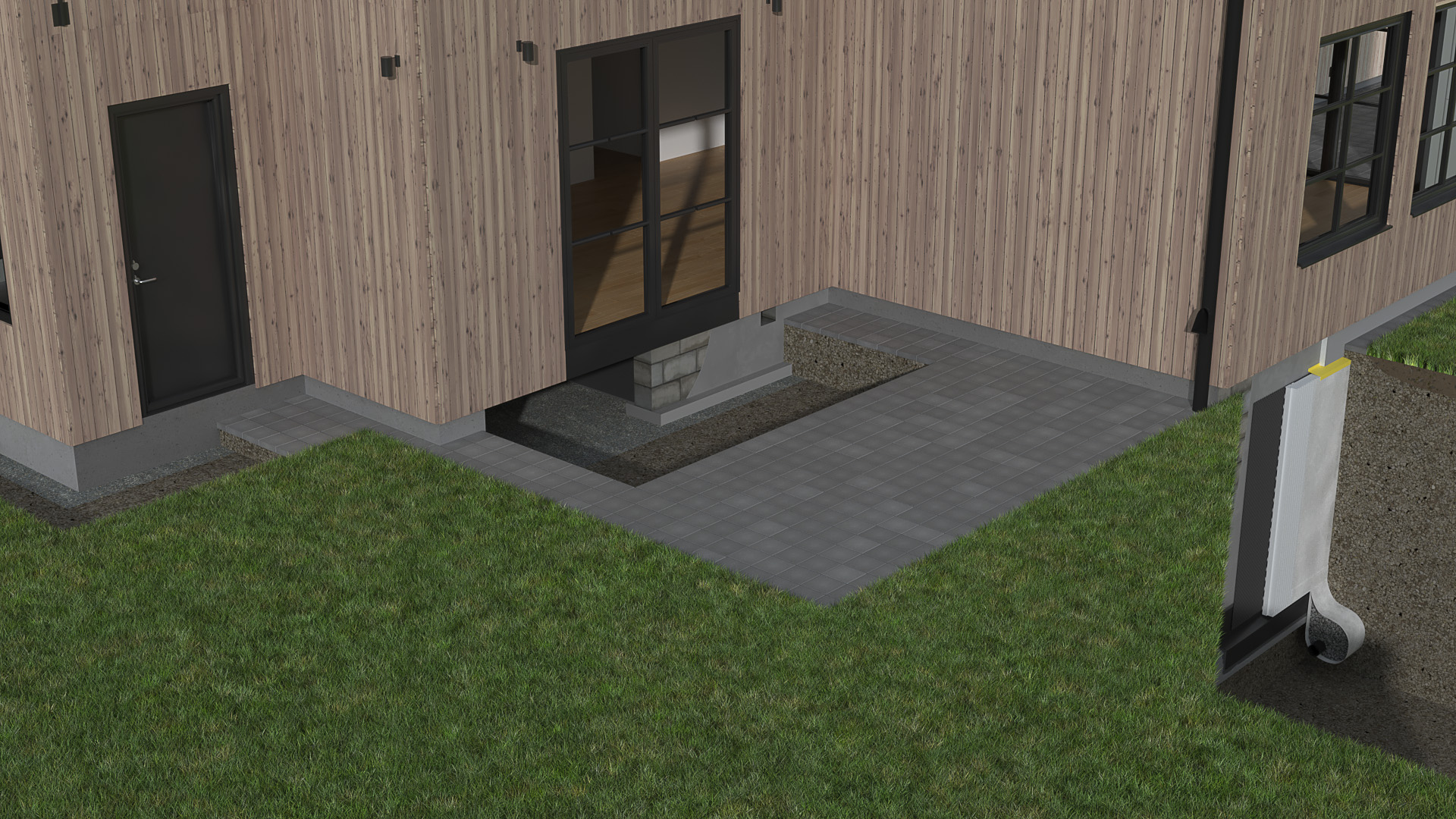
For foundation structures such as crawl space and pier foundation, moisture or radon protective solutions are required for the floor structure and ground.


Radon membrane is used as a radon-protective sealing system and prevents radon gas from spreading through the foundation structure to the building.

Exterior basement wall against the ground requires external moisture protection.

The internal climate screen prevents moist and warm air from penetrating the outer roof's insulation and structure.
The external climate shield in the roof creates a windproof shell that also dries out any moisture from the roof's insulation and construction.
The roof underlayment is the outer roof's lower water-repellent layer. Its primary function is to act as weather protection during construction and secondarily as extra protection during use.
Water-repellent bitumen membrane on balcony.
The outer roof is the roof's external water-repellent layer. Its primary function is to provide weather protection throughout its service life, and secondarily to be aesthetically and architecturally pleasing.
The interior climate screen prevents moist and warm air from penetrating the outer wall's insulation and structure.
The external climate shield in the wall creates a windproof shell that also dries out any moisture from the outer wall's insulation and construction.
When installing windows or doors, it is important to seal and insulate. This way, you avoid heat loss and prevent moisture from seeping into the structure. There are two methods for sealing and insulating: an all-in-one solution with expanded sealing strips and a traditional mineral wool insulation with tape.
Sill insulation is tasked with protecting the wall's or floor's sill from the foundation's moisture. It also creates an airtight seal.
For foundation structures such as crawl space and pier foundation, moisture or radon protective solutions are required for the floor structure and ground.
Radon membrane is used as a radon-protective sealing system and prevents radon gas from spreading through the foundation structure to the building.
Exterior basement wall against the ground requires external moisture protection.